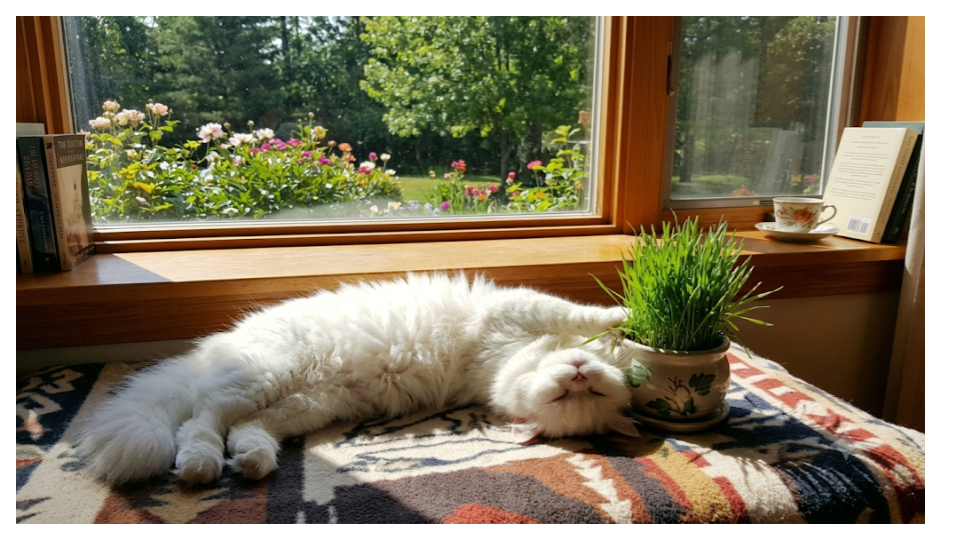
If your cat likes chewing on plants, cat grass can provide a more appropriate indoor option than allowing them to investigate random houseplants. Cat grass is easy to grow, relatively inexpensive, and many cats seem to enjoy nibbling it. However, it is not an essential part of a cat's diet, and choosing the right grass and growing it safely are important.
The Short Answer
Cat grass usually refers to young grasses grown specifically for cats, commonly from wheat, oat, barley, or rye seeds. Most healthy cats do not need cat grass nutritionally, but it can provide a safe plant-chewing option and environmental enrichment when grown without harmful pesticides or chemicals.
Cats should still eat a complete and balanced feline diet. Cat grass should be treated as an optional extra rather than a nutritional replacement or treatment for digestive problems.
What Is Cat Grass?
Cat grass is a general term for several types of young grass that owners grow indoors for cats to chew.
It is not one specific plant species. Commercial cat-grass products commonly contain cereal-grain grasses such as:
- Wheat grass
- Oat grass
- Barley grass
- Rye grass
VCA Animal Hospitals notes that grasses marketed for cats commonly come from cereal-grain plants and that owners can try different varieties to see which one their cat prefers.
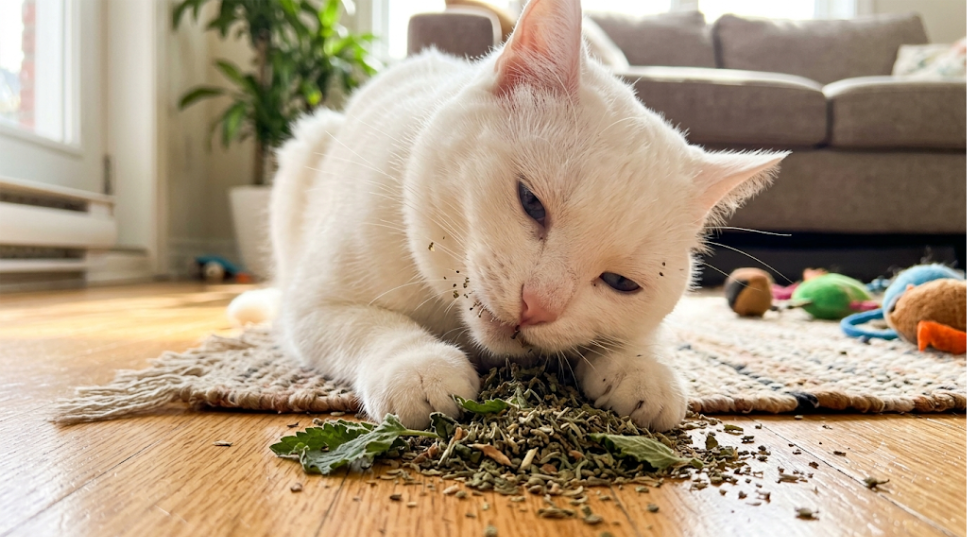
Cat grass should not be confused with catnip.
Catnip (Nepeta cataria) belongs to the mint family and contains compounds that can produce behavioral responses such as rolling, rubbing, increased activity, or relaxation in susceptible cats.
Cat grass is primarily something cats chew and eat.
In other words:
Cat grass = something to nibble.
Catnip = a plant that can trigger a behavioral response.
A cat may enjoy one, both, or neither.
Why Do Cats Eat Grass?
Scientists do not have one definitive explanation for why cats eat grass.
Grass-eating appears to be a common behavior and does not automatically mean that a cat is sick. Veterinary sources describe several possible explanations, including natural plant-chewing behavior and the ingestion of fibrous material.
You may also notice grass fragments later in your cat's stool or occasionally in vomit because cats cannot fully digest large amounts of fibrous grass.
For indoor cats, another practical benefit is environmental enrichment.
Cornell University's College of Veterinary Medicine specifically mentions growing cat grass as one way of bringing part of the outdoor environment indoors for cats.
Providing an appropriate grass may also give plant-chewing cats an alternative to household plants.
That matters because many common houseplants are unsafe for cats.
Cornell notes that indoor cats may chew houseplants and suggests alternatives such as oat grass, while warning that a number of ornamental plants can be dangerous.
Is Cat Grass Good for Cats?
Cat grass can be a useful form of enrichment, but it is not medically necessary for most cats.
A cat eating a complete and balanced diet should normally receive its essential nutrients from its regular food.
PetMD notes that grass is not a medical necessity for modern pet cats and should not be considered a standard treatment for gastrointestinal disorders.
This distinction is important.
Cat grass can be offered because your cat enjoys it.
It should not be used as a home treatment for:
- Persistent vomiting
- Constipation
- Hairball problems
- Loss of appetite
- Digestive disease
- Other unexplained gastrointestinal symptoms
Those problems may require veterinary assessment.
For a healthy indoor cat that enjoys chewing plants, however, a small container of properly grown cat grass can be a simple enrichment activity.
What Types of Cat Grass Can You Grow?
Several grasses are commonly used for cat grass, and there is no universal best option for every cat.
TypeGeneral CharacteristicsGood Choice For
Wheat grass | Commonly available and easy to grow | First-time cat-grass growers
Oat grass | Soft young shoots and commonly recommended as a cat-safe green | Cats that enjoy tender grass
Barley grass | Fast-growing cereal grass | Owners wanting another variety to try
Rye grass | Can produce dense green shoots | Cats that prefer a thicker patch of grass
Mixed cat grass | Contains several compatible seed types | Owners unsure which variety their cat prefers
VCA recommends trying one variety or several and observing which your cat prefers.
For most owners, the exact variety is less important than making sure the product is intended for pets and has not been treated with inappropriate chemicals.
Quick Comparison
FeatureCat GrassCatnipRandom Houseplants
Main use | Chewing and enrichment | Behavioral enrichment | Decoration
Eaten by cats | Often | Sometimes | Sometimes
Behavioral "high" | No | Can occur in responsive cats | Usually no
Necessary in diet | No | No | No
Generally suitable for cats | When using appropriate grass varieties | Generally when used appropriately | Depends entirely on the plant
Main concern | Chemicals, mold, overeating | Excessive exposure may cause temporary GI upset in some cats | Some species can be highly toxic
Best approach | Grow specifically for the cat | Offer occasionally as enrichment | Verify every plant before allowing access
The biggest practical difference is safety.
A product clearly grown as cat grass gives you much more control over what your cat is chewing than allowing access to unidentified household or outdoor plants.
How to Choose
When buying cat grass seeds or a growing kit, keep the decision simple.
- Choose a clearly identified seed variety. Wheat, oat, barley, or rye are common options used for cat grass.
- Avoid chemically treated grass. Do not deliberately offer grass exposed to pesticides, herbicides, or other lawn chemicals.
- Choose pet-appropriate growing materials. Your cat may dig into the soil as well as chew the leaves.
- Use a stable container. Cats may pull or paw at the grass, so lightweight pots are easily overturned.
- Look for healthy growth. Grass should appear fresh rather than slimy, moldy, or badly deteriorated.
- Start with a small amount. Observe how your cat reacts before providing unlimited access.
- Consider a growing kit if you are new to it. Kits can be easier because the seed, container, and growing medium are already matched.
- Replace unhealthy grass. If the grass develops mold or starts deteriorating badly, discard it and grow a fresh batch.
You do not need to buy an expensive product.
The most important factors are knowing what you are growing and keeping it clean and chemical-free.
How Do You Grow Cat Grass Indoors?
Cat grass is generally straightforward to grow.
VCA recommends using a shallow container with drainage, planting the seeds in a suitable growing medium, keeping them moist during germination, and using a sufficiently stable pot so the cat cannot easily overturn it.
A simple process is:
- Choose a shallow pot with drainage.
- Add clean growing medium.
- Spread the cat-grass seeds relatively evenly.
- Cover them lightly according to the seed instructions.
- Keep the growing medium moist rather than waterlogged.
- Place the pot somewhere suitable for germination.
- Allow the shoots to establish before giving your cat access.
- Monitor the grass regularly for mold or deterioration.
If your cat eats through one container quickly, you can grow two or more pots at different times.
That allows you to rotate them instead of waiting for a completely new batch to grow.
Should Indoor Cats Have Cat Grass?
Indoor cats do not require cat grass, but some may benefit from it as an enrichment option.
Indoor living protects cats from many outdoor risks, but owners also need to provide opportunities for natural behaviors.
These can include:
- Climbing
- Scratching
- Chasing
- Hunting-style play
- Hiding
- Exploring
- Foraging
- Chewing safe vegetation
Cat grass can be one small part of a richer indoor environment.
It should not replace interactive play, scratching surfaces, climbing opportunities, appropriate toys, or social interaction.
Think of it as an additional activity rather than a complete enrichment solution.
Important Safety Considerations
The most important rule is that not every green plant is safe for cats.
Some common ornamental plants can cause serious poisoning.
Lilies are particularly dangerous. Cornell University warns that certain lilies can cause life-threatening kidney failure in cats even after very small exposures.
The ASPCA also maintains an extensive database of plants reported to be toxic or non-toxic to cats and other pets.
Other practical precautions include:
- Do not offer grass that has been treated with pesticides or lawn chemicals.
- Do not let cats eat moldy cat grass.
- Supervise cats that aggressively pull grass, soil, or growing material from the container.
- Avoid letting your cat consume large amounts at once.
- Do not assume that something is safe simply because it looks like grass.
- Keep toxic houseplants completely inaccessible.
- Use real plant material intended for cats rather than decorative artificial grass.
Long strands of indigestible material can create gastrointestinal problems if swallowed. Cornell specifically warns that artificial decorative grass can become tangled in a cat's intestine and may be dangerous if ingested.
PetMD also notes that excessive grass consumption or swallowing very long pieces can potentially create digestive problems, including intestinal obstruction.
If your cat repeatedly vomits after eating grass, consumes unusually large amounts, stops eating normally, becomes lethargic, or develops other concerning symptoms, remove access and contact your veterinarian.
Frequently Asked Questions
Is cat grass the same as catnip?
No.
Cat grass generally refers to young cereal grasses such as wheat, oat, barley, or rye grown for cats to chew.
Catnip is Nepeta cataria, a member of the mint family. It can cause a temporary behavioral response in cats that are genetically sensitive to it.
A cat can enjoy both products, but they serve different purposes.
Does my cat need cat grass?
No.
Most healthy cats eating a complete and balanced diet do not need cat grass for nutrition. It is primarily an optional enrichment item and safe chewing alternative for cats that enjoy vegetation.
Can cat grass make a cat vomit?
Yes, some cats may vomit after eating grass.
An occasional episode may occur because grass is fibrous and not completely digestible. However, frequent vomiting should not automatically be blamed on the grass.
Persistent or repeated vomiting warrants veterinary advice.
Can kittens eat cat grass?
A healthy kitten may show interest in safe cat grass, but there is no nutritional need to introduce it.
Young kittens are particularly curious and may chew the grass, soil, or container, so access should be supervised.
If you are unsure whether it is appropriate for an individual kitten, ask your veterinarian.
How much cat grass should a cat eat?
There is no universal serving size that every cat needs because cat grass is not an essential dietary component.
Allowing occasional nibbling is different from letting a cat consume large quantities.
If your cat eats grass obsessively or regularly consumes large amounts, discuss the behavior with your veterinarian.
How often should cat grass be replaced?
Replace the grass when it becomes moldy, unhealthy, badly damaged, or deteriorated.
There is no need to follow an exact number of days because growth depends on the grass variety, temperature, watering, growing medium, and how heavily your cat grazes on it.
Growing several small pots in rotation can make it easier to provide fresh grass.
Can I give my cat grass from the lawn?
It is safer to grow grass specifically for your cat.
Outdoor grass may have been exposed to pesticides, herbicides, fertilizers, animal waste, parasites, or other contaminants. PetMD and VCA both caution owners about outdoor grass that may have been chemically treated.
Will cat grass stop my cat from eating houseplants?
It may give your cat a more appropriate alternative, but there is no guarantee that it will completely stop houseplant chewing.
Cornell recommends preventing access to potentially dangerous plants even when safe alternatives such as oat grass are provided.
Do not rely on cat grass alone to protect your cat from toxic plants.
The Bottom Line
Cat grass is an optional enrichment item that can give indoor cats a safer outlet for their natural interest in chewing vegetation.
Wheat, oat, barley, and rye grasses are common choices, and cat grass can be easily grown at home. What matters most is using an appropriate seed, avoiding pesticides and other harmful chemicals, preventing mold, and keeping dangerous household plants out of reach.
A healthy cat does not need cat grass to complete its diet, and it should not be used as a treatment for digestive or medical problems.
If your cat enjoys it, offer a small amount, keep it fresh, and observe how your cat responds.
Editorial Sources
- VCA Animal Hospitals — Where the Green Grass Grows: Grass Treats for Cats. Veterinary guidance on cat grass varieties, growing, quantity, and potential risks.
- Cornell University College of Veterinary Medicine — Feline Behavior Problems: Destructive Behavior. Guidance on houseplant chewing and safer alternatives such as oat grass.
- Cornell University College of Veterinary Medicine — Common Cat Hazards and plant-safety guidance.
- ASPCA Animal Poison Control — Toxic and Non-Toxic Plant List — Cats. Reference database for plant toxicity in cats.
- PetMD — Why Do Cats Eat Grass?, reviewed veterinary information on grass-eating behavior and safety.