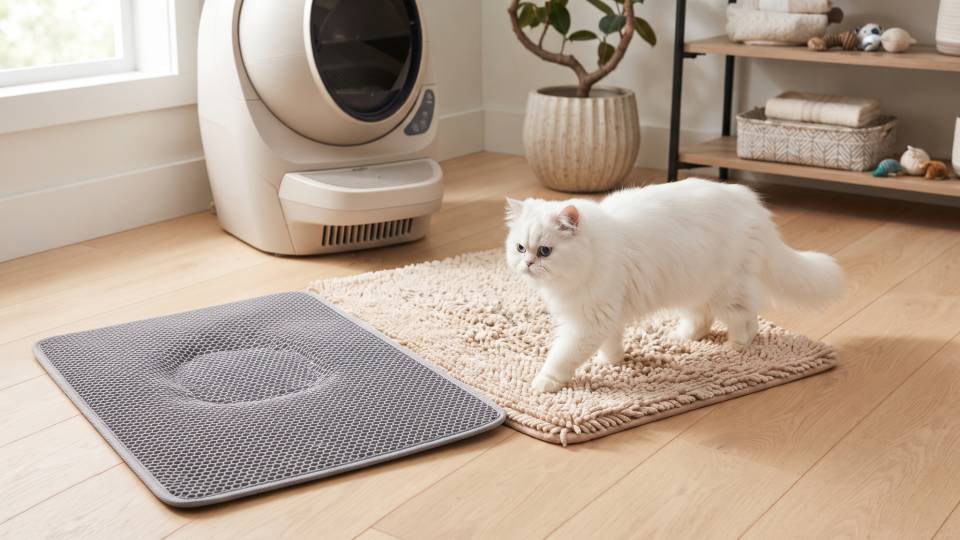
Stepping on scattered cat litter is an everyday frustration for many cat owners. Even when the litter box is clean, small granules can travel into hallways, settle beneath furniture, and appear several rooms away from the tray.
A cat litter mat can help contain some of that mess. Placed around the litter box exit, it provides a surface where loose particles can collect before your cat carries them farther through the home.
However, litter mats vary considerably. Some use open honeycomb layers, others have textured mesh, and some resemble washable rugs. The right choice depends on your litter, your available space, your cleaning routine, and whether your cat willingly walks across the surface.
This guide explains what litter mats can realistically do, how different designs compare, and how to choose one that makes daily cleanup easier.
The Short Answer
A cat litter mat helps collect loose litter near the litter box, reducing the amount that spreads across your floors. Choose a mat that covers your cat’s usual exit path, feels comfortable underfoot, stays flat, and is easy to clean. A mat can improve litter containment, but it will not eliminate tracking or replace regular litter box maintenance.
What Is a Cat Litter Mat, and How Does It Work?
A cat litter mat is a removable floor covering designed to catch litter around a litter box.
It can collect particles in two main ways: catching litter kicked out during digging and trapping loose granules as your cat walks away.
Different surfaces achieve this differently. A mesh design holds particles between flexible strands, while a grooved surface collects them in recessed channels. For example, Catit describes a combination of pockets and mesh textures, while PetSafe uses plastic mesh and grooves in its litter mat design. These are manufacturer descriptions rather than independent performance comparisons.
A double-layer honeycomb mat works slightly differently. Openings in the upper layer allow suitably sized particles to fall into a collection layer underneath. You then separate or open the layers to remove the trapped litter.
The practical goal is containment: keeping more of the loose litter in one manageable area.
Litter trapping and waterproofing are different features
A mat may catch dry litter effectively without protecting the floor from liquids.
Likewise, a solid waterproof mat may contain a small spill but have relatively little texture for trapping granules.
If floor protection matters, check the actual product specifications. Pay attention to the backing, seams, edges, and cleaning instructions rather than assuming that every litter mat is waterproof.
Do Cat Litter Mats Really Reduce Tracking?
They can help, but the result depends on the whole setup.
A useful mat needs to sit where your cat actually steps. A heavily textured mat provides little benefit if your cat jumps over it or leaves the box from another side.
Several practical factors influence the result:
- Exit behavior: A cat that walks out slowly gives the mat more opportunity to collect loose litter.
- Coverage: A small mat may miss the landing area completely.
- Litter shape and size: Particles must fit the mat’s grooves or openings to collect effectively.
- Surface acceptance: Some cats avoid unfamiliar or pronounced textures.
- Maintenance: A mat full of loose litter can become another source of scatter.
RSPCA Australia includes a towel or mat beneath the litter tray among its setup suggestions, alongside regular cleaning and suitable tray placement. This supports treating a mat as one part of the toileting area.
To judge your own setup, compare the amount of litter beyond the mat over several days while keeping other factors reasonably consistent. Look at both the surrounding floor and whether your cat changes its route.
What Are the Main Types of Cat Litter Mats?
The most common designs are double-layer honeycomb mats, textured mesh mats, grooved solid mats, and washable fabric mats. None is automatically best for every household.
Double-layer honeycomb mats
These mats have an upper layer with openings and a lower section that collects particles.
Their main advantage is that some loose litter drops beneath the walking surface. Models with a wide opening can also make emptying relatively straightforward.
Check the opening size against your litter. Large pellets may remain on top rather than falling through, while damp litter can stick inside the layers.
Cleaning access matters as much as collection. A mat that opens widely is generally easier to inspect and rinse than one with a small access gap.
Textured mesh mats
Mesh mats use a network of flexible strands or loops to collect granules.
They can provide a broad textured area without a separate collection pocket. However, litter, hair, and debris may become lodged within the mesh.
Before buying, check how the manufacturer recommends removing trapped particles. A surface that looks effective in a product photo may require more shaking or rinsing than you prefer.
Grooved silicone or rubber-style mats
These designs typically have a solid base with ridges, channels, or shallow recesses.
An accessible surface can be convenient for wiping and inspecting. However, material names alone do not establish waterproofing, grip, or durability.
Check whether the mat has raised edges, whether it can lie flat, and whether the backing is suitable for your flooring.
Washable fabric mats
Fabric mats resemble small rugs and may appeal to owners who prefer a softer, less pronounced texture.
Their maintenance requirements vary. Some are machine washable; others require hand washing or have restrictions on detergent, temperature, or drying.
A fabric surface can also hide embedded particles. Check both the top and underside during cleaning, and verify whether any backing protects the floor from moisture.
What Size Litter Mat Should You Buy?
Choose the size according to your cat’s exit path and the available floor space, rather than the litter box footprint alone.
A mat that fits neatly beneath a box may leave almost no exposed area for collecting litter. Conversely, a large mat can be inconvenient if it obstructs a doorway or curls against nearby furniture.
Before ordering, measure:
- The width of the litter box exit.
- The clear floor area in front of it.
- Any side route your cat regularly uses.
- Door clearance and nearby walking space.
You can mark a proposed mat outline with removable tape before purchasing. Observe where your cat steps relative to the outline, then remove the tape afterward.
What if your cat jumps out?
Position the mat around the usual landing area, provided the placement remains comfortable and unobstructed.
Avoid creating barriers simply to force more contact with the mat. Your cat should retain easy access to and from the litter box.
For a top-entry box, observe several exits before deciding where coverage would be useful. The landing point may vary.
Where Should You Place a Cat Litter Mat?
Place it along the route your cat naturally takes when leaving the box.
Depending on the design, this may mean putting the mat directly in front of the entrance or positioning part of it under the tray to help stabilize it. Check that the box remains level and that the mat does not bunch up beneath it.
After installation, look for:
- Edges that curl upward.
- A surface that slides on the floor.
- Gaps where litter collects.
- A doorway that catches on the mat.
- Changes in your cat’s willingness to approach the tray.
Keep the overall toileting location quiet and accessible. RSPCA guidance also recommends locating litter trays away from food and water.
If a new mat makes access awkward, adjust or remove it. Cleaner floors are useful only when the toileting area still works for your cat.
Quick Comparison
Double-layer honeycomb litter mats collect loose granules through openings in the upper layer, holding them in a compartment underneath. They are a practical option if you want collected litter separated from the walking surface. However, larger pellets may not fit through the openings, and both layers need to be accessible for thorough cleaning.
Textured mesh litter mats use flexible strands or loops to catch particles as your cat walks across them. They provide a broad collection surface, but litter and hair can become embedded in the mesh. Choose a model with clear cleaning instructions and a texture your cat willingly steps on.
Grooved solid litter mats collect scattered particles in channels on the surface. Their exposed grooves make debris easy to see and reach during cleaning, although shallow designs may hold relatively little litter. Check the backing, edge construction, and product specifications if liquid protection is a priority.
Washable fabric litter mats offer a softer, rug-like surface that may suit cats reluctant to walk on pronounced textures. Their main trade-offs are embedded litter and drying time. Before purchasing, confirm whether the mat is machine washable and whether its backing protects the floor from moisture.
How to Choose
- Watch your cat first. Note where it steps, turns, or lands after leaving the box.
- Measure the exposed collection area. Include the walking route, not just the space beneath the tray.
- Match the design to your litter. Compare particle size with the mat’s openings or grooves.
- Prioritize an acceptable texture. Your cat needs to walk across it willingly.
- Check stability. Look for a mat that lies flat and remains steady on your floor.
- Verify liquid protection separately. “Litter trapping” does not necessarily mean waterproof.
- Choose manageable cleaning requirements. Consider rinsing space, drying time, and how easily the mat opens.
- Read care instructions before purchasing. Confirm whether machine washing, vacuuming, or particular cleaners are allowed.
- Consider replacement needs. A washable product is useful only if it remains intact and practical to maintain.
If you are unsure between two designs, choose according to the problem you most need to solve: scattered dry litter, difficult cleaning, poor floor protection, or a surface your cat dislikes.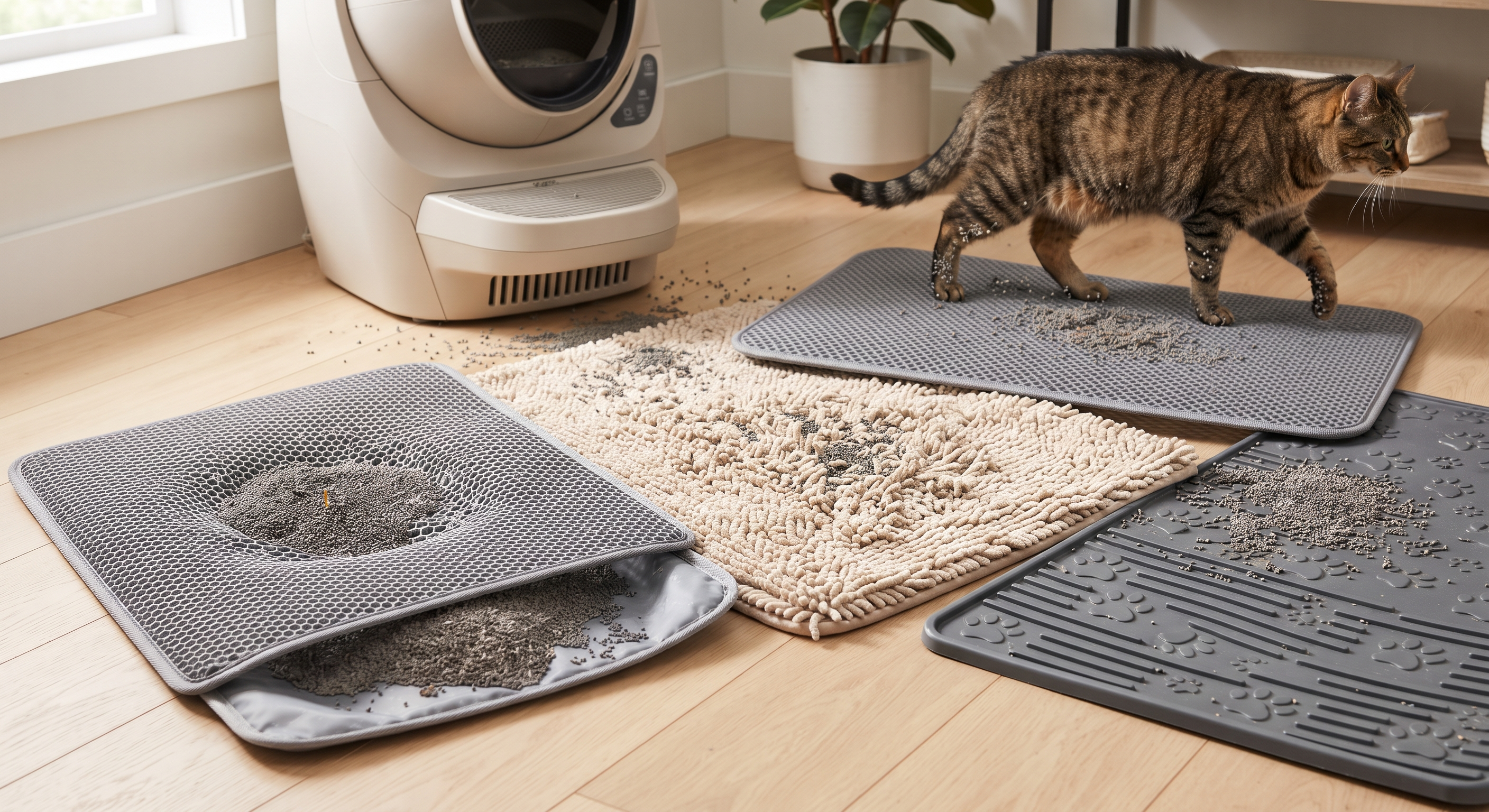
How Do You Clean a Cat Litter Mat?
Remove loose particles regularly, clean contamination promptly, and follow the manufacturer’s washing instructions.
A complicated mat that stays dirty is unlikely to improve your cleaning routine.
1. Inspect the mat during daily litter box care
Look for accumulated granules, damp patches, fecal contamination, damage, and curled edges.
Lift it periodically to inspect the floor underneath. A clean-looking upper surface does not tell you whether moisture or debris has collected beneath the backing.
2. Remove dry litter
Depending on the design, empty the lower compartment, shake the mat gently into an appropriate waste container, or use an approved cleaning method.
Avoid shaking vigorously indoors, where dust and small particles can spread.
If using a vacuum, check that both the vacuum and mat manufacturer permit it, and avoid vacuuming wet litter.
3. Wash according to the product label
For hand-washable models, clean accessible grooves, folds, seams, and collection layers. Rinse away cleaning residue.
Do not assume a mat is machine washable because it bends easily or resembles fabric.
RSPCA guidance warns that strongly scented cleaning products can discourage litter tray use. Choose a suitable cleaning method without leaving a heavy fragrance around the toileting area.
4. Allow it to dry fully
Let all layers dry before putting the mat back. Confirm that the floor is dry too.
If drying takes a long time, a spare mat may make your routine easier.
5. Reassess persistent problems
If the mat remains difficult to clean, retains an unpleasant smell, or repeatedly traps damp debris in inaccessible areas, a simpler design may be a better fit.
Important Safety Considerations
A litter mat should make the area easier to maintain while preserving comfortable access for your cat.
Watch for avoidance
Notice whether your cat hesitates, stretches to avoid the surface, or starts taking an unusual route after the mat appears.
Remove the mat temporarily if necessary and observe whether normal movement returns. Do not force your cat to stand on it.
Inspect for chewing and damage
Remove a mat that sheds pieces, develops loose strands, or is being torn apart. Contact your veterinarian if you suspect your cat has swallowed material.
Keep the surface stable
A sliding mat or raised edge can create an awkward footing or trip hazard. Check it after cleaning and whenever you move the litter box.
Treat floor protection claims carefully
Waterproof backing does not guarantee that liquids cannot escape around an edge or through a damaged seam. Inspect the floor beneath the mat, particularly after an accident.
Keep cleaning products out of reach
Follow product labels, rinse as directed, and allow the mat to dry before returning it to use. Avoid adding fragrances or essential oils to make the litter area smell better.
Investigate changes in toileting
Repeated accidents or sudden litter box avoidance deserve attention beyond changing the mat. Contact a veterinarian if toileting behavior changes, especially if your cat appears uncomfortable.
Frequently Asked Questions
Are cat litter mats worth buying?
They can be worthwhile when litter regularly collects around the box and the mat makes that mess easier to remove. Their value depends on suitable placement, your cat accepting the surface, and cleaning requirements you can maintain.
Can a litter mat stop all tracking?
No. Some litter may remain attached to paws or fur, and some cats jump beyond the mat. Aim for a noticeable reduction in scattered litter rather than a completely litter-free floor.
Is a larger mat always better?
No. Extra coverage helps only when it covers a useful route and fits safely in the room. A smaller, stable mat in the correct location may be more practical than a large one that bunches up or blocks a doorway.
Can I use a regular doormat or bath mat?
Possibly, but inspect the texture, backing, loose fibers, and washing instructions. A general household mat may collect litter without being easy to clean or suitable for moisture near the box.
Do litter mats work with wood or tofu pellets?
They can collect scattered pellets, but compatibility depends on the design. Pellets that are too large for honeycomb openings will stay on top. Compare the mat’s dimensions and surface structure with the litter you actually use.
Should I put trapped litter back in the box?
Do not assume collected litter is clean. Discard anything damp, soiled, mixed with debris, or of uncertain condition. Check the relevant product guidance rather than treating a collection compartment as clean storage.
How often should I replace a litter mat?
There is no universal replacement interval. Replace it when damage, curling, persistent odor, failing backing, or cleaning difficulties prevent it from working properly.
Will a litter mat control litter box odor?
Its main role is collecting litter. Keeping the mat clean can prevent it from becoming an additional source of odor, but the litter box still requires regular waste removal and cleaning.
The Bottom Line
The right cat litter mat fits your cat’s route, suits your litter, and is easy enough to clean consistently.
Choose a design your cat will comfortably cross, verify any waterproofing claims, and check the floor underneath regularly. If the mat catches useful amounts of litter without complicating access or maintenance, it is doing its job.
Editorial Sources
- RSPCA Australia: How Do I Encourage My Cat to Use a Litter Tray?
- RSPCA: How to Litter Train a Cat
- Catit: Litter Mats — Manufacturer Design Information
- PetSafe: Cat Litter Mat — Manufacturer Product Information