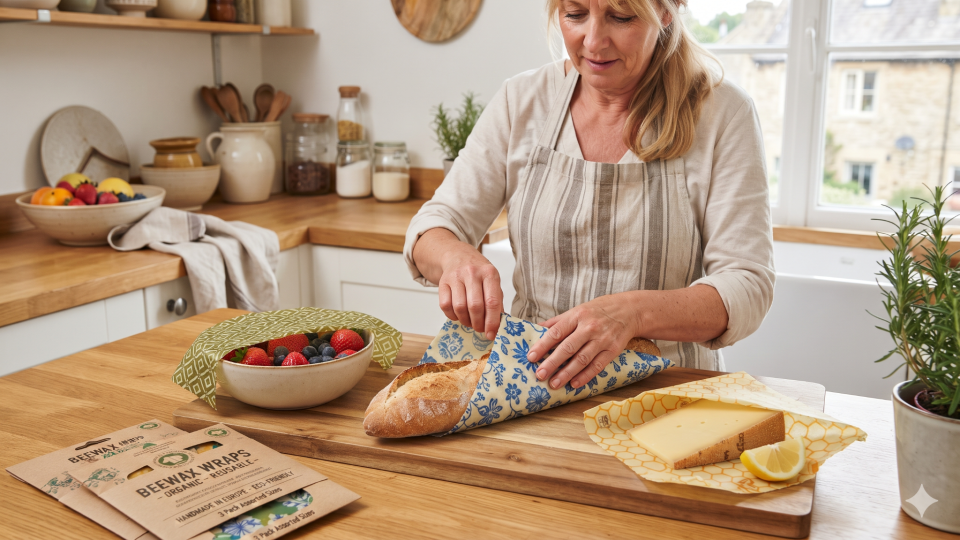
Beeswax wraps can be useful when you want to store half a cucumber, cover a bowl, or pack a sandwich without reaching for another sheet of disposable plastic wrap. However, choosing the right food matters just as much as choosing the wrap itself.
Bread, firm cheese, and many fruits and vegetables are practical starting points. Raw meat, hot food, and liquids need different storage solutions. There are also situations where a food technically fits inside a wrap but is easier to store safely and cleanly in a container.
This guide explains which foods suit beeswax wraps, which foods need extra care, and how to choose, clean, and use your wraps without overlooking food safety.
The Short Answer
Beeswax wraps are generally suitable for bread, firm cheese, many fruits and vegetables, relatively dry sandwiches, and covering bowls of chilled food, provided your product’s instructions allow those uses. Avoid direct contact with raw meat, poultry, fish, or seafood, and keep wraps away from hot food and heat sources. For liquids, very messy foods, and any use your manufacturer excludes, choose a suitable container with a fitted lid. Reusable Food Storage
What Are Beeswax Wraps, and How Do They Work?
Beeswax wraps are reusable fabric sheets coated with a wax-based mixture that helps them hold their shape around food or containers.
Ingredients vary. For example, Bee’s Wrap lists cotton, beeswax, plant oil, and tree resin in its original wraps. Other manufacturers use different formulations, so the care instructions for one brand should not automatically be applied to another.
To use a wrap, place it around food or over a bowl, then gently press it into shape with your hands. The warmth makes the coating more pliable, allowing the material to grip itself or the container. Reusable Food Storage
Think of the finished covering as a flexible food cover. It does not provide the rigid protection of a lunch box, and you should not assume it creates a leakproof or airtight seal.
For everyday use, ask three questions:
- Is this food suitable for direct contact with my particular wrap?
- Can I clean the wrap adequately afterward using the approved method?
- Does the food need a tighter seal or stronger protection than the wrap provides?
These questions are more useful than trying to replace every food-storage product with the same material.
Which Foods Work Well with Beeswax Wraps?
The most practical foods are those that fit comfortably inside the wrap, leave manageable residue, and match the manufacturer’s approved uses.
Bread, Rolls, and Plain Baked Goods
Bread is a straightforward place to start. A large wrap can fold around a loaf, while smaller pieces can hold a bread roll or plain baked snack.
Check that the wrap overlaps enough to stay closed. A sheet that barely reaches around the bread will be frustrating to use.
Plain baked goods are also easier to unwrap and clean up after than sticky pastries or heavily frosted cakes. For delicate decorations, choose a rigid container that keeps the covering away from the surface.
HoneyBee Wrap includes bread, rolls, and croissants among its suggested uses. This establishes suitability for its products; it does not guarantee a particular freshness period for every recipe or storage environment. HoneyBee Wrap
Practical tip: Buy a bread-sized wrap only if you regularly store bread that way. Otherwise, a large container or bread-storage solution you already own may meet your needs.
Firm and Semi-Firm Cheese
Blocks of firm cheese are another useful application. Their shape is easy to wrap, and they are generally less messy than spreadable cheese.
Suitable starting points include a block of cheddar or a similar firm cheese, subject to the wrap’s instructions.
Very soft cheese is less convenient because it can smear or stick to the coating. HoneyBee Wrap specifically advises caution with very soft cheeses for this reason. HoneyBee Wrap
For cheese stored in brine, cream cheese, or a dairy-based dip, retain the original suitable container or use a clean food-storage container with a lid.
Wrapping does not change the cheese’s refrigeration requirements or override the storage instructions on its packaging.
Cut Fruits and Vegetables
Many wraps are designed for covering cut produce. Examples listed by Beeswax Fabric Wraps include half an avocado, apple, and onion, as well as carrot sticks. Beeswax Fabric Wraps
The easiest pieces to manage have a fairly defined shape and do not release much liquid while being wrapped.
For example, you might use a small wrap around the cut end of a cucumber rather than wrapping the entire vegetable. This uses less material and makes the piece easier to identify in the refrigerator.
For small fruit pieces or produce that releases juice, a container may be more convenient. The aim is to protect the food while keeping cleanup manageable.
Do not expect the wrap to stop every change in appearance. Cut produce can still brown, soften, or spoil, and wrapping does not establish a new safe storage period.
Sandwiches and Dry Snacks
Beeswax wraps can make a convenient covering for a compact sandwich or a small portion of dry snacks.
Beeswax Fabric Wraps suggests sandwiches and folded snack pouches for foods such as nuts. Beeswax Fabric Wraps
Choose the filling with cleanup in mind. A sandwich that stays together is easier to handle than one with sauce escaping from the sides.
A wrap also provides little protection against crushing. If your lunch goes into a crowded bag, place the wrapped sandwich inside a lunch box.
For crackers or other foods where crispness is especially important, compare the result with a tightly closed container before deciding which method suits you best.
Herbs and Other Delicate Produce
Some brands recommend their wraps for herbs. Abeego, for example, provides guidance for wrapping cilantro and other produce. Abeego®
Treat this as a food-specific use rather than a reason to wrap every herb identically. A small bunch that you plan to use soon may be manageable, while loose leaves or fragile stems may be easier to organize in a container.
Follow your product’s guidance about moisture. Avoid adding water or using a damp towel simply because that technique is recommended for a different wrap or vegetable.
Can Beeswax Wraps Cover Bowls and Leftovers?
Yes, many products can cover bowls, but covering a bowl and wrapping food directly are different uses.
A bowl keeps the food supported while the wrap covers the opening. This can be convenient when direct contact would make the wrap messy.
Bee’s Wrap lists covering bowls and dishes among its intended applications. Reusable Food Storage
For practical use:
- Choose a wrap that extends beyond the rim.
- Ensure the outside edge of the bowl is clean and dry.
- Mold the wrap around the rim.
- Keep the bowl upright.
- Use a fitted lid when spills would be a problem.
Do not put the wrap over a hot bowl or hot food. At the same time, do not leave perishable leftovers on the counter for an extended period while waiting to use it.
Instead, refrigerate leftovers promptly in suitable shallow containers. Use a heat-compatible covering during cooling, then consider a beeswax wrap once the food and container are cool. USDA advises refrigerating perishable leftovers within two hours, or within one hour when the surrounding temperature exceeds 90°F/32°C. Food Safety and Inspection Service
Which Foods Should You Avoid Wrapping?
Some exclusions concern hygiene. Others concern mess, coating damage, or an inadequate seal. Keeping those reasons separate helps you choose a better alternative.
Raw Meat, Poultry, Fish, and Seafood
Avoid wrapping raw animal proteins directly.
Manufacturer guidance commonly excludes raw meat and fish because the wraps require gentle, cool-water cleaning and cannot be treated like equipment that tolerates high-temperature cleaning. HoneyBee Wrap also explicitly includes poultry in its exclusions. HoneyBee Wrap
Use a suitable leakproof container instead. For raw proteins, a fitted lid also helps contain juices and reduces the chance of contaminating surrounding food.
If raw juices accidentally contact a wrap, set it aside and consult the manufacturer’s contamination guidance. Do not assume an ordinary rinse makes it suitable for ready-to-eat food again.
Hot Food and Hot Containers
Do not use beeswax wraps on freshly cooked food or warm cookware.
Heat can soften or melt the coating. Devon Beeswax Wrap Co. warns against hot food, hot containers, microwaves, ovens, and other high-temperature sources. devonbeeswaxwrapco.co.uk
Remove the wrap before reheating food, even when it has only been used as a bowl cover.
Soup, Sauces, and Other Liquids
A folded wrap is not a liquid-storage bag.
For soup, stock, dressing, or sauce, use a container designed to contain liquids. A wrap over an upright bowl may serve as a cover if the product allows it, but it should not be relied on to prevent spills during transport.
HoneyBee Wrap recommends tight-fitting containers for liquid-based foods. HoneyBee Wrap
Sticky and Difficult-to-Clean Foods
For sticky dough, frosting, thick spreads, and very greasy food, a container is often the more practical choice.
This is a recommendation based on cleanup and handling rather than a claim that every such food is prohibited. A useful decision rule is simple: if removing the residue would require scrubbing or cleaning products that your wrap cannot tolerate, use another storage method.
Strong-Smelling or Staining Foods
Onions and deeply colored foods can leave reminders of their last use.
BeeBee notes that onion odors can remain on wraps and that foods such as beetroot or blackcurrants may stain them. Beeswax Wraps – BeeBee & Leaf
You might keep a separate wrap for onions, but a closed container is easier if you want to avoid transferring aromas between foods.
Staining alone should not be confused with mold. If you cannot determine what a mark is, follow the manufacturer’s advice before reusing the wrap.
Can You Wrap Lemons, Tomatoes, or Pineapple?
Check the instructions for the exact product. There is no single rule for all acidic foods across all brands.
Bee’s Wrap lists lemons among its small-wrap uses. Nature Bee says citrus can be used with its wraps but advises against prolonged contact, with particular caution around pineapple. HanaBee specifically advises against direct wrapping of pineapple. Reusable Food Storage
These differences matter. Avoid taking a brand-specific restriction and presenting it as a universal fact about every wax formulation.
If the instructions are unclear, place the cut fruit in a suitable container. This is especially convenient for pineapple pieces and other juicy fruit.
Quick Comparison
Beeswax Wraps
Choose these for suitable foods that benefit from a flexible covering, such as bread, firm cheese, certain produce, and compact sandwiches. Their main trade-offs are gentle cleaning requirements, sensitivity to heat, and limited spill protection.
Food Containers with Fitted Lids
Choose these for liquids, messy dishes, raw proteins, and foods that need protection from crushing. Check that the particular container is suitable for refrigeration, freezing, or reheating as needed.
Reusable Silicone Bags
Consider these when you want a flexible bag with a closure. Leak resistance and temperature limits vary, so confirm the product’s instructions rather than assuming all silicone bags perform alike.
Reusable Bowl Covers
These can be convenient when you mainly want to cover dishes. Check whether the cover simply sits over the opening or forms the kind of seal your food needs.
The practical choice depends on the task: bread may suit a wrap, soup needs a secure container, and a crowded lunch bag usually calls for rigid protection.
How to Choose
- Start with the foods you actually store. Choose sizes for your regular bread, cheese, produce, or bowls.
- Read the approved-use instructions. Look for clear guidance about direct food contact, temperature limits, and cleaning.
- Check the full material list. Consider the fabric, wax, oils, resins, and any relevant ingredient sensitivities.
- Allow enough overlap. The wrap should close comfortably without being stretched.
- Choose manageable care requirements. A product is useful only if you can clean and dry it consistently.
- Check freezer guidance separately. Beeswax Fabric Wraps permits freezing, while Mind Your Bees advises against it because of potential coating cracks. Follow your own brand’s instructions. Beeswax Fabric Wraps
- Start with a small set. Add more only after learning which sizes and uses fit your routine.
How Should You Clean and Store Beeswax Wraps?
Use the cleaning method supplied with your wrap. A typical routine is gentle washing in cool water with mild dish soap, followed by complete air drying.
Devon Beeswax Wrap Co. recommends a soft cloth, a cool-water rinse, and storage in a cool, dry place away from direct sunlight. devonbeeswaxwrapco.co.uk
A practical routine is:
- Remove loose food residue.
- Wash gently using the approved soap and water temperature.
- Rinse as directed.
- Let the wrap dry completely.
- Store it away from heat and contamination.
Avoid inventing a sanitizing method with boiling water, bleach, alcohol, or a dishwasher. If the wrap becomes contaminated, consult the manufacturer rather than experimenting.
Some products can be refreshed or rewaxed, but that is maintenance of the coating. It should not be treated as proof that a contaminated wrap has been disinfected.
Important Safety Considerations
Refrigeration Requirements Still Apply
A wrap does not keep perishable food cold.
USDA recommends keeping refrigerated food at 40°F/4°C or below. A wrapped sandwich containing perishable ingredients therefore still needs appropriate cold storage during travel. Food Safety and Inspection Service
Wrapping Does Not Reset Storage Time
Record when leftovers were prepared. USDA generally recommends using refrigerated leftovers within three to four days or freezing them for longer storage. Changing the covering does not restart that period. ask.fsis.usda.gov
“Antibacterial” Is Not a Food-Safety Guarantee
Do not interpret promotional language about wax or resin as permission to skip handwashing, refrigeration, or contamination precautions.
Use the wrap only within its approved food-contact and care instructions.
Check Ingredients When Allergies Matter
Formulations differ. BeeBee advises avoiding its wraps if you are allergic to their ingredients. If you have a known sensitivity, check the complete formulation and seek appropriate clinical advice when needed. beebeewraps.com
Keep Wraps Away from Flames
Wax-coated fabric is flammable. Keep it away from burners, candles, and other ignition sources. Beeswax Fabric Wraps
Stop Using a Wrap You Cannot Clean Reliably
Persistent residue, suspected mold, or unexplained odors warrant attention. Set the wrap aside and follow the manufacturer’s guidance. Do not continue food-contact use simply to extend its lifespan.
Frequently Asked Questions
Can Beeswax Wraps Touch Food Directly?
Yes, when the wrap is intended for direct food contact and the food is within its approved uses. Suitability for bread or cheese does not imply suitability for raw meat or every other food.
Can You Wrap Cooked Meat?
Brand guidance differs. BeeBee discusses cleaning after cooked-meat contact, while Nature Bee advises against directly wrapping cooked meat. A clean container with a fitted lid is a straightforward choice when instructions are restrictive or unclear. Beeswax Wraps – BeeBee & Leaf
Can Beeswax Wraps Stop Avocados from Browning?
Do not expect a guaranteed result. Fit, exposure to air, ripeness, and storage conditions affect the outcome. A wrap may be a convenient covering, but it does not establish how long the avocado will remain usable.
Can You Put Beeswax Wraps in the Freezer?
Only if the manufacturer permits it. Where freezing is allowed, follow instructions for handling the chilled wrap; some brands advise letting it warm slightly before unfolding to avoid cracking. Beeswax Fabric Wraps
How Long Do Beeswax Wraps Last?
There is no universal lifespan. Abeego estimates about a year with regular use and proper care, but actual service life depends on the product and how it is treated. Inspect condition and cleanliness instead of relying only on a calendar date. Abeego
Are Beeswax Wraps Vegan?
Traditional beeswax wraps contain an animal-derived ingredient. Plant-wax alternatives are available, but check the full formulation and instructions for the specific product.
Are Beeswax Wraps Automatically Better for the Environment?
A reusable wrap can replace disposable sheets when it is used repeatedly for suitable tasks. That alone does not establish that every wrap has a lower overall environmental impact.
Consider how often you will use it, whether it replaces something disposable, how you care for it, and what happens at the end of its life. Buying a large collection that remains unused offers little practical value.
The Bottom Line
Beeswax wraps are easiest to incorporate into a routine built around bread, firm cheese, selected produce, and simple packed lunches. Start with one or two uses that match the manufacturer’s instructions.
Keep suitable containers for raw proteins, liquids, hot food, and demanding cleanup tasks. A useful food-storage system gives each food an appropriate covering while making safe handling easy to maintain.
Editorial Sources
- Bee’s Wrap — Frequently Asked Questions
- HoneyBee Wrap — The Do’s and Don’ts of Wrapping Food with Beeswax Wraps
- Beeswax Fabric Wraps — Frequently Asked Questions
- Nature Bee — Frequently Asked Questions
- BeeBee & Leaf — FAQs
- USDA FSIS — Leftovers and Food Safety
- USDA FSIS — Refrigeration and Food Safety