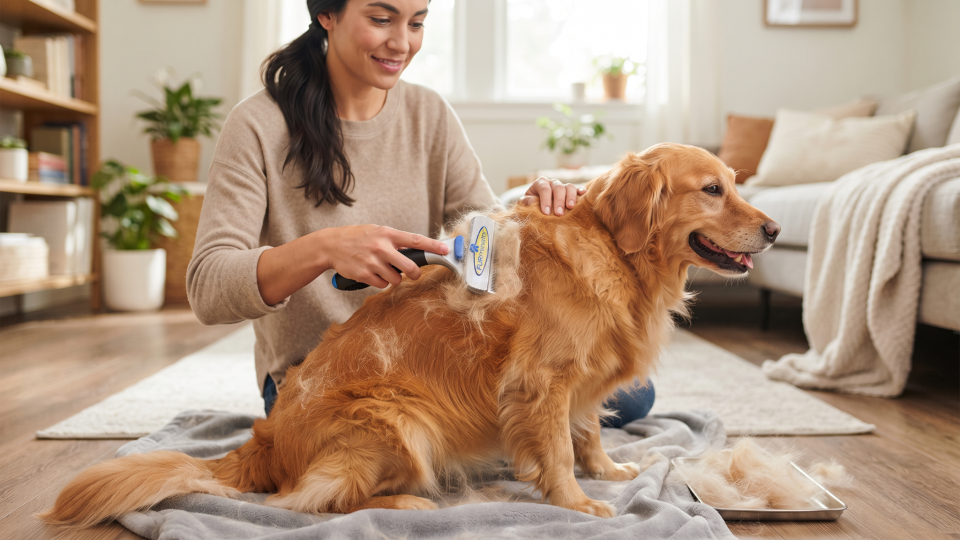
Living with dogs and cats often means finding fur on the sofa, clothing, rugs, and car seats. A quick cleanup can become frustrating when the same tool collects loose hair from one surface but leaves it embedded in another.
Choosing a pet hair remover starts with understanding where the hair collects. A compact lint roller can help with a jacket before you leave home, while a reusable upholstery roller or a suitable vacuum attachment may be more practical for a sofa.
This guide explains the main types of pet hair removal tools, their limitations, and how to build a cleaning routine around your home and your pet.
The Short Answer
The right pet hair removal tool depends on the surface you need to clean. Adhesive lint rollers are convenient for clothing, reusable rollers and rubber brushes can help with compatible upholstery, and vacuums with suitable attachments handle larger areas and collect loosened hair.
For many households, a useful starting kit is a small clothing roller, one reusable furniture tool, and a vacuum attachment suited to the surfaces you already own.
What Are Pet Hair Removal Tools?
Pet hair removal tools collect shed fur from household surfaces. They use different mechanisms, including adhesive sheets, directional fabric, rubber edges, brushes, or suction.
It helps to distinguish between two categories:
- Household cleaning tools remove hair from clothing, furniture, flooring, and car interiors.
- Pet grooming tools remove loose hair directly from an animal’s coat.
A furniture scraper, carpet rake, or adhesive lint roller should not be used to groom a dog or cat. Tools intended for direct contact with an animal need to suit its coat and have instructions for that purpose.
Regular brushing can support a household cleaning routine. The ASPCA explains that brushing helps remove loose hair and can reduce the amount shed around the home, although normal shedding cannot be stopped completely. ASPCA
Which Types of Pet Hair Removal Tools Are Available?
Adhesive Lint Rollers
Adhesive lint rollers collect hair on a sticky sheet. When the sheet becomes covered, you peel it away to expose a fresh surface.
Their main advantage is convenience. You can keep one near the front door, in a desk drawer, or in a travel bag for small touch-ups.
They are useful when you need to remove visible hair from a limited area. However, cleaning an entire sofa can consume many sheets, especially in a home with several pets.
Consider one if: You regularly find hair on everyday clothing.
Check before buying: Refill availability, sheet size, ease of peeling, and any fabric restrictions.
Test the roller on a hidden area before using it on delicate, loosely woven, or decorated clothing.
Reusable Pet Hair Rollers
Reusable rollers commonly use textured fabric or another collection mechanism to lift hair from upholstery. Some gather the hair in a compartment that you empty after use.
They can be convenient for routine cleaning of a compatible sofa, chair, or pet bed because they do not require a new adhesive sheet for every pass.
Results depend on the roller’s design and the material underneath it. Some require a firm, flat surface or a specific back-and-forth motion. Loose blankets may need to be held taut.
Consider one if: Your pet frequently rests on the same upholstered furniture.
Check before buying: Surface compatibility, required motion, cleaning instructions, and how easily the collection chamber opens.
“Reusable” does not necessarily mean washable. Follow the instructions for the particular product.
Rubber Brushes and Squeegee-Style Tools
Rubber tools use flexible bristles or edges to gather hair into clumps that can be picked up or vacuumed.
Their shape can make them useful around cushion edges, upholstery seams, and other areas where a larger roller is awkward. For example, BISSELL describes its rubber multi-surface brush as using rubber bristles and a squeegee to collect hair from upholstery and tight spaces. This is a manufacturer description, rather than an independent comparison. BISSELL Pet Grooming
A rubber tool generally gathers hair rather than containing it, so you will still need to dispose of the resulting clumps.
Consider one if: You need a compact manual tool for compatible furniture or car upholstery.
Check before buying: Edge flexibility, grip comfort, cleaning method, and approved surfaces.
Use light pressure. Stop if the tool pulls threads, changes the texture, or leaves marks.
Rubber Brooms
A rubber broom lets you gather hair while standing. It may be useful for larger areas where a small handheld tool would take too long.
Some models are designed for multiple surfaces. BISSELL, for example, describes its pet hair broom as using rubber bristles to sweep up pet hair. Check the individual model’s instructions before using it on a rug or finished floor. BISSELL® Brooms & Sweepers
Consider one if: You want a manual tool for regular floor cleanup.
Check before buying: Handle length, head width, access under furniture, and compatibility with your flooring.
Remove trapped debris from the head regularly and avoid dragging hard particles across a floor finish.
Carpet Rakes and Scraper-Style Removers
Carpet rakes and scraper-style tools can loosen hair caught in certain carpet or upholstery surfaces. Their cleaning edges vary considerably: some are soft and flexible, while others are rigid or abrasive.
This category requires particular attention to compatibility. A tool that works on a durable car mat may catch loops or damage a delicate sofa.
Consider one if: You have stubborn embedded hair on a surface explicitly approved by the tool manufacturer.
Check before buying: Edge material, prohibited fabrics, and whether the tool is intended for carpet, upholstery, or both.
Do not assume that a product advertised as a “pet hair remover” is safe for every textile.
Vacuums and Upholstery Attachments
Vacuums collect hair along with other loose debris. The attachment matters because a floor head may be difficult to use on stairs, cushions, or car seats.
Available options include upholstery nozzles, crevice tools, and powered miniature brush heads. Dyson’s attachment guidance describes tools intended for tight gaps and smaller upholstered areas; its pet-focused range also includes tools designed to collect hair from sofas, pet beds, and car seats. These descriptions establish intended uses, not superiority over other brands. dyson.com
Consider one if: You clean large areas, carpeted rooms, stairs, or multiple pet resting spots.
Check before buying: Attachment compatibility, weight, access to the brush roll, maintenance requirements, and replacement parts.
Before replacing a vacuum, check whether your existing machine has a suitable attachment.
Quick Comparison
Adhesive Lint Roller vs. Reusable Roller
An adhesive lint roller is convenient for quick clothing touch-ups and travel. Its ongoing costs include replacement sheets.
A reusable roller is worth considering for repeated furniture cleaning when its mechanism suits the upholstery. It needs regular emptying or cleaning and may be awkward on loose garments.
Choose according to the surface you clean most often.
Rubber Brush vs. Reusable Roller
A rubber brush gives you control around edges, seams, and smaller spaces. It usually gathers hair into clumps that require a second cleanup step.
A reusable roller can be convenient across a broad, flat cushion, especially if it stores the collected hair inside a chamber. Its size may limit access to narrow gaps.
Rubber Broom vs. Vacuum Cleaner
A rubber broom offers manual cleanup without a battery or power cable. You still need to collect and dispose of the hair it gathers.
A suitable vacuum can collect loosened hair and debris over larger areas, but requires maintenance and may be less convenient to carry between rooms.
Carpet Scraper vs. Softer Upholstery Tool
A scraper may help on an approved, durable surface with embedded hair. Its edge can also make it unsuitable for more delicate fabrics.
A softer tool is a more cautious starting point for unfamiliar upholstery, followed by a hidden-area test.
How Do You Choose a Pet Hair Remover?
Start With Your Main Cleaning Surface
Identify the problem that happens most often:
- Hair on work clothes.
- Fur on a sofa or armchair.
- Hair embedded in rugs.
- Accumulation on hard floors.
- Fur around car seat seams.
- Hair covering removable pet bedding.
Buy for that recurring task first. A tool that solves your main problem is more useful than a large kit with overlapping functions.
Check the Fabric or Floor Instructions
Look at both the cleaning tool’s instructions and the surface manufacturer’s care guidance.
Pay particular attention to:
- Loop-pile carpets.
- Loosely woven upholstery.
- Knitted blankets.
- Decorative stitching.
- Delicate fabrics.
- Coated or finished surfaces.
If compatibility is unclear, test a small hidden area using minimal pressure.
Consider How You Will Empty and Clean It
A tool may collect hair effectively but be unpleasant to maintain.
Check whether you can:
- Remove trapped fur without reaching sharp components.
- Open the collection compartment easily.
- Clean corners where hair accumulates.
- Replace worn parts.
- Follow the maintenance routine consistently.
Ease of maintenance matters when you use a tool every day.
Compare Ongoing Costs
The purchase price is only one expense.
Adhesive rollers require refills. Vacuums may require filters, bags, or replacement brush components. Reusable manual tools may eventually need replacement as their surfaces wear.
Consider the cost over your likely pattern of use rather than assuming the lowest-priced tool will be the least expensive.
Look for Evidence That Matches Your Home
When reading reviews, look for examples involving a similar surface and cleaning task.
A demonstration on a flat, tightly woven cushion does not establish how a tool will perform on a knitted throw. Useful reviews explain the material, the hair buildup, the cleaning method, and any limitations.
How Should You Remove Pet Hair From Different Surfaces?
Clothing
Lay the garment on a clean surface or hold the fabric steady. Follow its care instructions and use a fabric-compatible roller or brush with light pressure.
Support thin fabric to prevent stretching. Pay attention to cuffs, pockets, and folds where hair collects.
For persistent buildup, follow the garment’s washing instructions rather than repeatedly working the same area with an aggressive tool.
Sofas and Chairs
Start by checking the upholstery care guidance.
- Remove loose items and accessible cushions.
- Collect loose hair with a compatible attachment or manual tool.
- Work gently on remaining hair with an approved upholstery remover.
- Vacuum or pick up the gathered clumps.
- Clean cushion gaps with a suitable crevice attachment.
Stop if the fabric begins to snag or change appearance.
Carpets and Rugs
Use a vacuum head approved for the carpet and make slow, overlapping passes.
If hair remains embedded, check whether a rubber broom or carpet rake is suitable for that particular rug before using it. Collect loosened hair afterward.
Avoid using extra pressure to compensate for a poorly matched tool.
Car Interiors
Remove personal items and take out removable floor mats.
Use attachments that can reach seat seams and narrow gaps. A compatible rubber tool may help gather remaining hair from fabric areas.
Clean mats separately according to their care instructions, and avoid applying a scraper to leather, coated trim, or decorative stitching.
Pet Bedding
Remove loose surface hair before laundering, then follow the bed’s care label.
Check removable covers, zippers, and seams, and let washable parts dry as directed before putting them back into use.
What Cleaning Routine Is Practical for a Pet Household?
A manageable routine focuses on places where your pet spends the most time.
For frequent touch-ups: Keep a small tool near the sofa or entryway and clean visible buildup when needed.
For broader cleaning: Vacuum resting spots, nearby flooring, cushion gaps, and other recurring collection points.
For maintenance: Empty collection chambers, inspect rubber edges, and maintain vacuum filters and brush rolls according to the manual.
Use the amount of hair in your home to set the frequency. A fixed schedule will not suit every coat, season, or household.
Important Safety Considerations
Keep Household Hair Removers Separate From Grooming Tools
Do not use furniture scrapers, adhesive rollers, or carpet tools directly on your pet.
If you want to collect loose coat hair, choose an appropriate grooming tool and follow its instructions.
Keep Used Sheets and Hair Clumps Out of Reach
Dispose of adhesive sheets, collected fur, and damaged tool components promptly, especially if your pet investigates or chews household waste.
Disconnect Powered Equipment Before Maintenance
Switch off and disconnect a vacuum as instructed before removing tangled hair or opening a powered brush head.
Keep animals away from moving cleaning components during use.
Follow Instructions Before Adding Moisture
Do not wet a reusable roller, upholstery surface, or vacuum component unless the relevant instructions allow it.
A cleaning method that suits one material can damage another.
Frequently Asked Questions
Do Dog Hair and Cat Hair Need Different Removal Tools?
Usually, surface compatibility is a more useful starting point than the species alone.
Hair length, texture, buildup, and the fabric holding it can all affect the result. Choose a tool for the cleaning task rather than relying only on a “dog” or “cat” label.
Are Reusable Pet Hair Removers Better Than Disposable Rollers?
They suit different tasks.
A reusable tool may be practical for repeated furniture cleaning, while a disposable adhesive roller is convenient for clothing and travel. Compare cleaning effort, refills, durability, and the surfaces each product supports.
Can One Tool Clean Clothes, Carpets, and Furniture?
Some tools support multiple surfaces, but their performance and safety limits vary.
A small combination of tools is often more practical: one for clothing, one for compatible furniture, and a vacuum setup for larger areas.
Why Does Hair Remain After Vacuuming?
Hair may be caught in fabric fibers, or the attachment may not suit the surface. Maintenance issues can also affect cleaning performance.
Check the vacuum’s manual, empty or replace its collection container as directed, and inspect the filter and brush head. For remaining hair, consider a compatible manual tool.
Should You Buy a New Vacuum Just for Pet Hair?
Check your current vacuum’s condition and available attachments first.
A new machine is worth considering if your existing setup cannot handle the cleaning areas, is difficult to maintain, or lacks the attachments you need. Evaluate those practical limitations before purchasing.
Final Recommendation
Start with the surface that causes the most frustration. Choose a clothing roller for quick garment cleanup, a compatible reusable roller or rubber brush for furniture, and suitable vacuum attachments for floors, seams, and larger areas.
Check care instructions, test unfamiliar tools gently, and choose equipment you can clean easily. A small set of well-matched tools can make regular pet hair cleanup much more manageable.
Editorial Sources
- ASPCA: Dog Grooming Tips
- ASPCA: Cat Grooming Tips
- Dyson: How to Use Your Vacuum Cleaner Accessories
- BISSELL: Fur & Fuzz Multi-Surface Brush