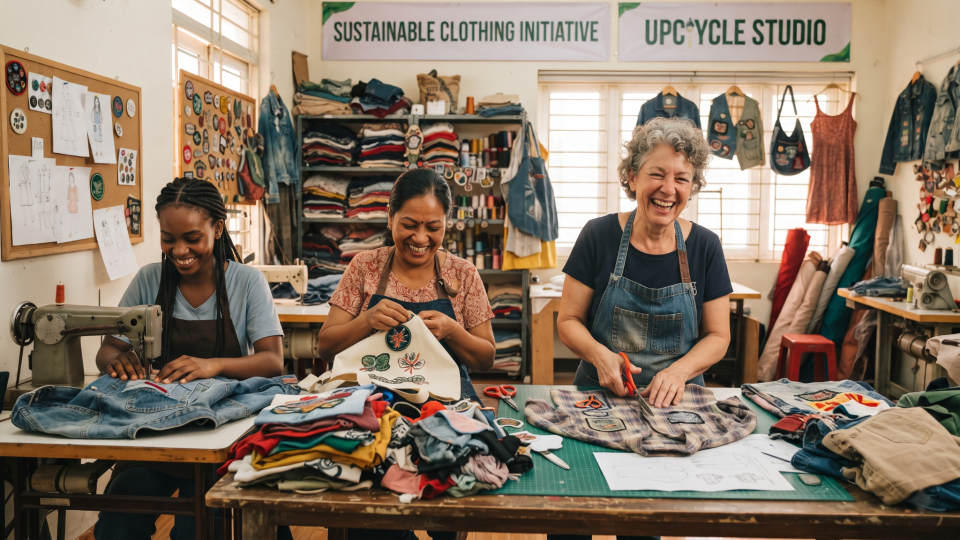
An old T-shirt with a stretched neckline, jeans with worn knees, or a shirt that no longer fits does not always need to become waste. Even when a garment has reached the end of its life as clothing, some of its fabric, buttons, pockets, and fasteners may still be useful.
Turning old clothes into cleaning cloths, reusable bags, cushion covers, or repair patches can help you make better use of materials you already own. Many projects require only scissors, a needle, and basic sewing skills.
However, choosing the right destination matters. A wearable jacket may be more useful to another person than as craft material. A badly damaged T-shirt might make excellent cleaning cloths, while contaminated fabric may be unsuitable for either donation or home projects.
This guide explains how to sort unwanted clothes, choose practical projects, and prepare items for textile collection when home reuse is no longer suitable.
The Short Answer
Start by repairing, wearing, selling, or donating clothes that remain suitable for use. For garments that can no longer be worn, turn sound sections of fabric into useful household items or check whether a local textile collection service accepts them.
Most home “clothing recycling” projects are technically reuse or upcycling: you change the garment’s purpose without processing its fibers into a new raw material. Choose projects you actually need so the finished items continue to be used.
What Is the Difference Between Reusing, Upcycling, and Recycling Old Clothes?
These terms describe different ways of keeping textiles useful.
Understanding the distinction helps you choose a realistic option and describe your projects accurately.
Reusing Clothes
Reuse means continuing to use a garment for its original purpose.
Examples include:
- Wearing a shirt you already own.
- Giving a coat to someone who needs it.
- Selling jeans that no longer fit.
- Passing children’s clothing to another family.
Repairing or altering an item can make continued use possible. Replacing a missing button or adjusting a hem may be all that is needed.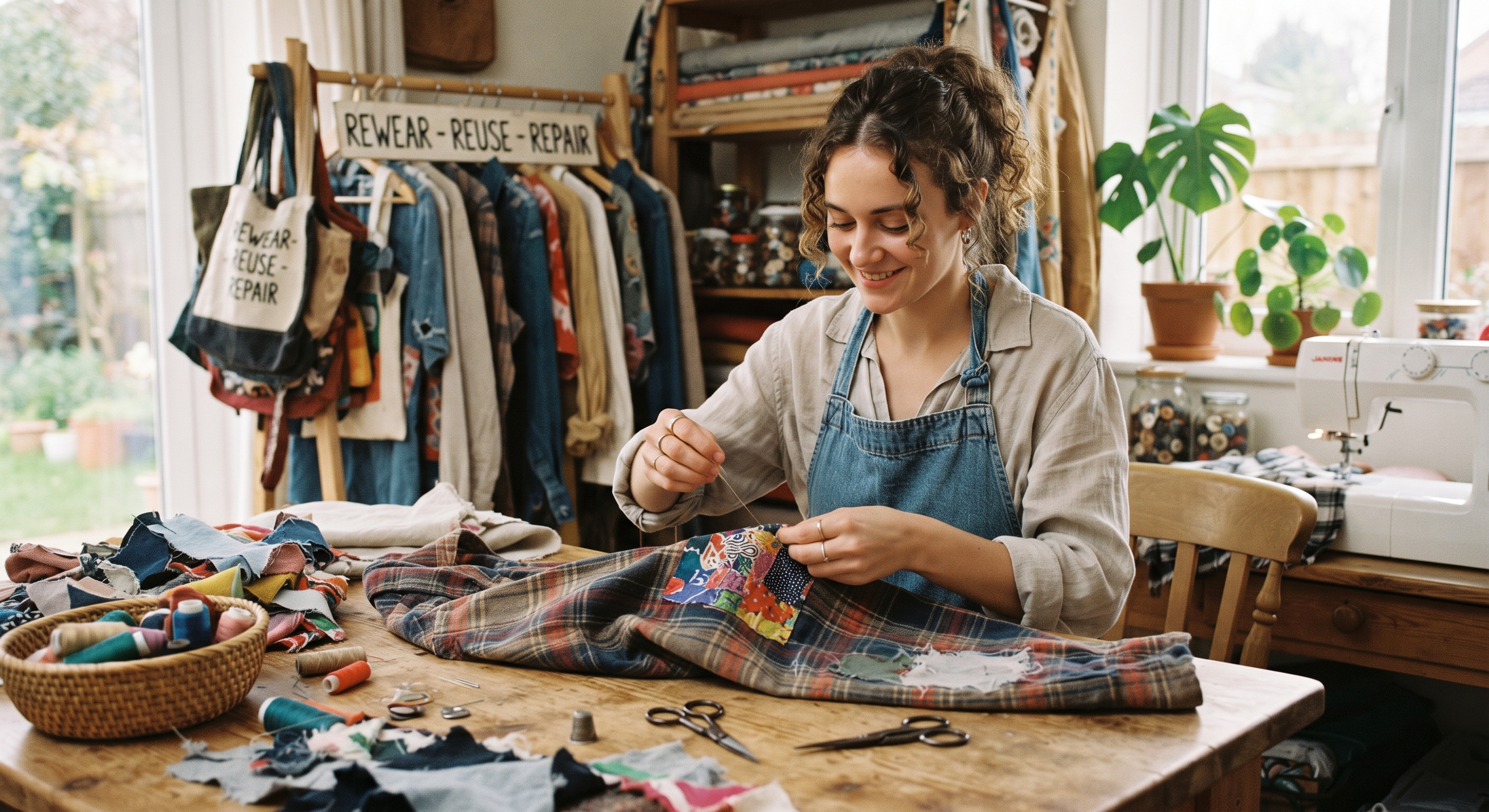
Upcycling Clothes
Upcycling means modifying an existing garment or fabric into a different useful item.
Examples include turning jeans into a storage basket, making a cushion cover from a shirt, or sewing fabric scraps into a patchwork bag.
The fabric remains recognizable as fabric. It has not been broken down and manufactured into new fibers.
Recycling Textiles
Textile recycling processes discarded materials into usable feedstock or other products.
Depending on the available system, textiles may be mechanically processed into fibers or undergo other recycling processes. The destination depends on factors such as composition, condition, and processing capacity.
Collection does not guarantee that an item will become new clothing. The European Environment Agency describes used-textile pathways that include sorting, reuse, recycling, export, and disposal. European Environment Agency (EEA)
For households, the practical task is to separate suitable materials and find a service that clearly explains what it accepts.
How Should You Sort Old Clothes Before Starting?
Sort clothes before cutting anything. This preserves useful garments and prevents you from spending time on fabric that will not suit your project.
Create four groups.
1. Clothes You Can Continue Wearing
Check whether the problem is easy to solve.
A garment may need:
- A replacement button.
- A repaired seam.
- A small patch.
- A shorter hem.
- A simple alteration.
- Cleaning according to its care label.
Try the item on before deciding. Sometimes a minor change restores its usefulness.
2. Clothes Suitable for Another Person
Set aside clean, wearable items that you no longer need.
Check the recipient’s or organization’s requirements before donating. Donation services may differ in the clothing types, condition, and quantities they accept.
Do not assume a donation organization also operates a recycling service for damaged textiles.
3. Clothes Suitable for Home Projects
Look for garments with sound fabric in useful areas, even if other sections are worn.
Good examples include:
- A T-shirt with a damaged neckline but an intact body.
- Jeans with worn knees but strong fabric around the lower legs.
- A shirt with a torn sleeve but an undamaged back.
- A skirt with a broken zipper and usable fabric panels.
Wash and dry suitable items according to their care labels before cutting.
4. Clothes Requiring Specialist Handling or Disposal
Keep wet, moldy, pest-affected, or chemically contaminated textiles separate.
Do not turn these into household cleaning cloths, craft materials, or donated goods. Follow the relevant local waste guidance and the collection service’s instructions.
Which Old Clothes Work Best for Different Projects?
Match the fabric’s existing qualities to its new purpose.
Cotton T-Shirts
Soft T-shirt fabric can be useful for cleaning cloths, lightweight ties, and simple no-sew projects.
However, absorbency varies with fiber content, fabric construction, and finishes. Test a small piece before cutting an entire garment into cloths.
Stretchy jersey can also be harder to sew neatly than a stable woven fabric.
Denim Jeans
Sound denim is useful for repair patches, organizers, and sturdy fabric containers.
Its thickness can make seams bulky, especially where several layers overlap. Avoid placing original heavy seams directly on top of new seams where possible.
A domestic sewing machine may need an appropriate needle and settings for the fabric.
Woven Shirts
Shirts often provide relatively flat panels suitable for cushion covers, gift wrapping, and small drawstring bags.
The existing button placket can sometimes become a convenient opening, reducing the need to install another fastener.
Knitwear
Old sweaters may be useful for cushion covers or carefully planned patchwork.
Knit fabric can unravel when cut. Secure the edges using a method appropriate to its construction before handling the pieces extensively.
Do not assume every sweater can be felted; results depend on its fiber content and treatment.
Synthetic Sportswear
Stretchy sportswear can be difficult to repurpose into structured objects.
Choose a project that accommodates stretch rather than trying to force the material into a rigid shape. If no useful project fits, check whether an appropriate textile service accepts the garment.
How Can You Turn Old T-Shirts Into Reusable Cleaning Cloths?
Cleaning cloths are one of the simplest projects because the finished pieces do not need to look perfect.
They are particularly useful when the garment is no longer wearable but still has soft, intact fabric.
What You Need
- A clean, dry T-shirt.
- Fabric scissors.
- A ruler or a cloth to use as a size guide.
- A needle and thread, if you want to finish the edges.
Step 1: Test the Fabric
Use a small section to check absorbency and whether it leaves lint on the surfaces you intend to clean.
Avoid thick printed areas if they make the cloth stiff or awkward to use.
Step 2: Remove Unhelpful Sections
Cut away damaged areas, bulky seams, and any parts that do not suit the task.
Keep the largest usable panels.
Step 3: Cut Practical Sizes
Choose sizes that feel comfortable in your hand.
Smaller pieces can suit quick wipe-ups. Larger pieces may be more convenient for dusting or general household cleaning.
You do not need identical rectangles unless you prefer them for storage.
Step 4: Finish the Edges if Necessary
Many jersey fabrics can be used without hemming, although edges may curl. Woven fabrics usually benefit from a hem or another suitable finish to control fraying.
Step 5: Separate Cloths by Task
Use a simple system so bathroom cloths do not get confused with those used elsewhere.
Store used cloths separately from clean ones, wash them appropriately, and dry them fully before storage.
How Can You Make a Tote Bag From an Old T-Shirt?
A T-shirt can become a lightweight bag for soft, relatively light items.
A sewn version gives you more control over the bottom seam. A no-sew version is quick to make but relies on secure knots and sound fabric.
No-Sew Method
- Lay the shirt flat and align the front and back.
- Cut away the sleeves, preserving enough fabric for comfortable handles.
- Enlarge the neckline to create the opening.
- Mark the intended bottom of the bag.
- Cut matching strips through both layers below that line.
- Tie corresponding front and back strips together securely.
- Check for gaps, loose knots, and weak fabric.
- Test the bag with a light load.
Keep the strips and knots consistent enough to close the bottom properly.
What Is It Suitable For?
Consider using it for:
- Scarves.
- Lightweight clothing.
- Yarn and craft supplies.
- Other soft, light items.
Do not assume a homemade T-shirt bag can safely carry bottles, sharp objects, or heavy groceries. Fabric wear and handle design strongly affect its strength.
If you need a dependable shopping bag, use a suitable pattern, sound fabric, and reinforced seams.
How Can Old Jeans Become Useful Household Items?
Jeans offer several reusable components: denim panels, pockets, belt loops, buttons, and sometimes a working zipper.
Inspect each part before deciding what to make.
Repair Patches
Use sound denim to reinforce another garment.
Cut a patch that extends beyond the damaged area and attach it to sound surrounding fabric. Sewing a patch only to frayed edges can leave it poorly supported.
Match the patch’s thickness and flexibility to the garment. A very stiff patch may feel uncomfortable on lightweight trousers.
Pocket Organizers
Intact back pockets can hold small household items when attached securely to a suitable backing.
Possible uses include storing:
- Sewing tools.
- Charging cables.
- Pens.
- Small craft supplies.
Consider the total weight and how the organizer will be supported. Avoid placing sharp objects where they can fall out or puncture the backing.
Small Storage Containers
Sections of trouser legs can become soft containers for lightweight items.
A simple version involves closing one end securely and folding the top edge into a cuff. The fabric’s stiffness and the container’s proportions determine how well it stands.
Use a pattern if you want a flat base or a more structured shape.
Coasters and Mats
Layered denim can become washable coasters or small surface mats.
Test for dye transfer before placing them on pale furniture. Do not describe a homemade denim mat as heat-resistant or use it as protective equipment for hot cookware.
How Can You Turn an Old Shirt Into a Cushion Cover?
A woven shirt can be a convenient starting point because its button front may provide a ready-made opening.
Choose a shirt with enough sound fabric to fit your cushion and allow for seams.
Basic Method
- Wash and dry the shirt according to its care label.
- Button it and lay it flat.
- Measure the cushion insert.
- Mark the required panels, allowing appropriate seam allowances.
- Check that the button opening will remain usable.
- Cut the panels.
- Place their right sides together.
- Sew around the edges and finish the raw seams.
- Open the buttons and turn the cover right side out.
- Insert the cushion and check the fit.
Make a small paper plan before cutting around pockets or curved seams.
If you are donating the finished cover, include clear care information where possible.
What Can You Make From Smaller Fabric Scraps?
Small scraps are useful when they suit an actual need.
Keep a limited selection of clean, usable pieces instead of saving every offcut indefinitely.
Fabric Gift Wrapping
Larger woven pieces can wrap suitable gifts. Hem the edges if the fabric frays.
A square or rectangle is often versatile, and the recipient can reuse it for wrapping or another purpose.
Drawstring Storage Bags
Small bags can organize cables, sewing supplies, accessories, or travel items.
Use a simple pattern and an appropriate closure. Avoid long loose cords on items intended for young children.
Visible Mending
Contrasting scraps can turn a repair into a design feature.
Choose fabric that behaves similarly to the garment during washing and wear. Test for color transfer if the materials are unfamiliar.
Patchwork Panels
Combine compatible scraps into a larger panel for a cushion cover, bag, or decorative project.
Similar fabric weights and care requirements usually make the finished piece easier to manage.
Quick Comparison
Repairing vs. Upcycling
Repairing is a strong option when a garment can return to regular use with a manageable fix.
Upcycling is useful when the original garment no longer serves you but its fabric remains suitable for something you need.
Before cutting, ask whether the item could still work as clothing after a simple repair.
Donating vs. Making Household Items
Donation suits wearable clothes that meet the receiving organization’s requirements.
Household projects suit damaged garments with usable sections. Cutting up a good-quality coat for cleaning cloths usually overlooks its more valuable function as clothing.
No-Sew vs. Sewn Projects
No-sew projects require fewer tools and can be a good starting point.
Sewn projects offer more control over seams, fit, and reinforcement. For items that must carry weight, construction deserves particular attention.
Home Upcycling vs. Textile Recycling
Home upcycling works best when you have a suitable material, a realistic project, and a use for the result.
Textile collection may be more appropriate when useful home projects are exhausted. Acceptance rules and available processing differ, so confirm the requirements first.
How to Choose
- Start with a need. Make something you will use regularly.
- Preserve wearable clothing. Consider repair, alteration, resale, or donation before cutting.
- Match fabric to function. Check strength, stretch, absorbency, and washability.
- Inspect the whole garment. Identify sound areas and hidden damage.
- Choose a manageable project. Begin with cloths or simple patches if you are new to sewing.
- Use existing supplies first. Check for suitable thread, buttons, and tools before buying more.
- Plan the cuts. Measure and arrange pieces to make good use of the available fabric.
- Test the result. Check seams, fit, color transfer, and practical performance.
- Limit unfinished projects. Keep only the materials you have space and a realistic plan to use.
Important Safety Considerations
Avoid Contaminated Textiles
Do not use clothing contaminated with hazardous chemicals for household crafts or cleaning cloths.
Check local disposal guidance rather than placing unsuitable items in donation or recycling collections.
Use Appropriate Tools
Cut on a stable surface and keep fingers clear of scissors and rotary cutters.
Use sewing needles and machine settings suitable for the fabric. Thick denim seams can be difficult for equipment not designed to handle them.
Do Not Improvise Protective Products
Unknown old fabric is unsuitable for making items whose safety depends on tested performance.
Examples include oven gloves, protective equipment, and products requiring reliable flame resistance.
Check Buttons, Cords, and Decorations
Loose buttons and other small parts require particular care in products accessible to young children.
Avoid adapting clothing into children’s products without considering the relevant design and safety requirements.
Be Cautious With Food-Contact Uses
Old clothing may contain dyes, finishes, prints, or residues unsuitable for direct food contact.
Use repurposed bags for non-food storage unless you can establish their suitability for the intended food use.
Do Not Assume Natural Fibers Are Compostable as Garments
A cotton or wool label does not describe every thread, fastener, print, coating, or trim.
Do not put complete garments into compost based only on the main fiber listed. Follow the composting service’s requirements.
Frequently Asked Questions
Can You Recycle Clothes With Holes?
Sometimes. Certain textile collectors accept damaged clothing, while donation organizations may accept only wearable items.
Check the specific service. A hole does not necessarily prevent home reuse if the remaining fabric is sound.
Can Old Clothes Go in the Household Recycling Bin?
Do not assume they can.
Use the collection method specified by your local waste service or textile collection organization. Keep textiles out of ordinary packaging recycling unless your service explicitly instructs otherwise.
Is Upcycling Always Better for the Environment?
No single project is automatically the best option.
Its usefulness depends on whether it extends material use, replaces something you otherwise needed, and avoids unnecessary extra purchases. A wearable garment may be better kept in clothing use.
Do I Need a Sewing Machine?
No. Cleaning cloths, simple fabric wraps, and some T-shirt bags can be made without one.
Hand sewing can handle many small repairs and projects. A machine becomes useful for longer seams and repeated work.
Should Clothes Be Washed Before Donation or Repurposing?
Prepare them according to the receiving organization’s instructions and the garment’s care label.
For home projects, start with suitable clean, dry fabric so you can inspect and work with it properly.
Can Blended Fabrics Be Recycled?
Some services accept them, but acceptance and processing options vary.
Check the collector’s requirements rather than assuming that all blends are recyclable or that none are.
What Should You Do With Leftover Scraps?
Keep useful pieces for planned repairs, combine compatible pieces in a project, or check whether a textile service accepts scraps.
Do not add them to a donation bag intended for wearable clothes unless the organization accepts that material.
Does Donating Mean the Clothing Will Be Reused Locally?
Not necessarily. Ask the organization about its sorting and distribution practices if the destination matters to you.
Used textiles can move through complex domestic and international systems, so avoid assuming a particular outcome without evidence. European Environment Agency (EEA)
The Bottom Line
Give old clothes the most useful next life their condition allows. Repair wearable garments, pass suitable items to someone who needs them, and turn damaged fabric into practical objects you will actually use.
Start with one simple project—a set of cleaning cloths, a repair patch, or a cushion cover—and use it before making more. For materials you cannot use, choose a textile collection service with clear acceptance instructions.
Editorial Sources
- WRAP — Textiles Resource Hierarchy: Product Reuse
- WRAP — Transform Textiles
- European Environment Agency — Circularity of the EU Textiles Value Chain in Numbers
- European Environment Agency — Europe’s Used Textiles Are an Increasing Waste and Export Problem