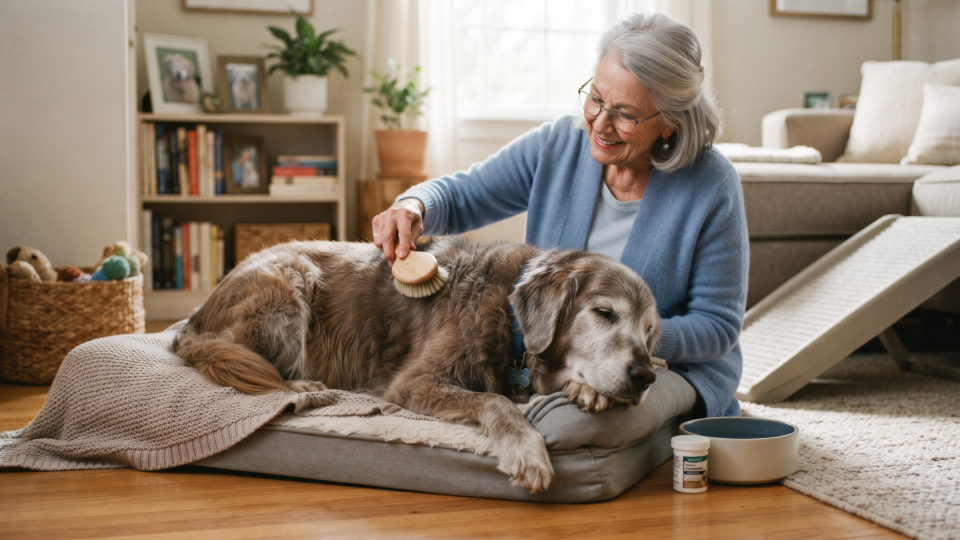
An older dog may still greet you enthusiastically, enjoy a familiar walk, and insist on sitting beside you at the end of the day. Yet everyday activities can gradually require more effort. Getting up from a slippery floor, climbing into the car, or settling comfortably at night may become harder.
Good senior dog care starts with noticing these changes and finding out what they mean. A slower pace does not automatically mean your dog should stop exercising, and a new toileting accident does not necessarily mean they have forgotten their training. Some changes reflect aging, while others signal conditions that deserve treatment.
This guide explains how to adapt veterinary care, nutrition, exercise, home comfort, and daily routines to your dog’s changing needs. It also covers useful products and the warning signs that should prompt professional help.
The Short Answer
Caring for a senior dog means combining regular veterinary examinations with appropriate nutrition, comfortable daily movement, an accessible home, and close attention to changes in behavior or health. Ask your veterinarian about examinations at least twice a year and an individual screening plan. Pain, unexplained weight loss, increased thirst, and sudden confusion should be investigated rather than dismissed as old age. aaha.org
When Is a Dog Considered Senior, and What Changes Need Attention?
A dog is considered senior in relation to their expected lifespan, rather than at one universal birthday. The American Animal Hospital Association (AAHA) defines the senior stage as the final quarter of estimated lifespan; breed, size, and individual health affect when that stage begins. AAHA
Larger dogs generally enter their senior years earlier than smaller dogs. Instead of relying only on a “seven years and older” label, ask your veterinarian when to begin a senior care plan for your particular dog.
Know Your Dog’s Normal Routine
Your observations at home help your veterinarian understand changes that may not appear during a clinic visit. Pay attention to how your dog gets up, eats, drinks, moves, sleeps, and interacts.
A simple notebook or phone log can record:
- Appetite and any difficulty picking up or chewing food.
- Weight measurements and visible changes in body shape.
- Drinking, urination, and toileting accidents.
- Walking pace, slipping, limping, or reluctance to use stairs.
- Nighttime waking, pacing, or unusual vocalization.
- Interest in family activities and previously enjoyable games.
- New lumps or changes in existing ones.
Record when a change began, how often it happens, and whether it is getting worse. Short videos of movement or unusual behavior can be useful at an appointment. Do not delay care while trying to collect a perfect record.
For example, “my dog is slowing down” gives less information than “my dog now pauses before climbing the three steps to our door and has slipped twice this week.” Specific observations help make the consultation more productive.
Recognize Subtle Signs of Pain
Dogs do not always cry when something hurts. A dog who hesitates before lying down, stops jumping onto a favorite chair, or becomes irritable when handled may be uncomfortable. AAHA warns that owners can mistake chronic pain for normal aging. AAHA
A veterinary assessment can help distinguish joint pain from weakness, neurological problems, or other causes. An orthopedic bed or ramp may improve access and comfort, but persistent difficulty moving still needs investigation.
Arrange More Frequent Veterinary Reviews
AAHA’s senior dog guidance recommends physical examinations at least twice a year. Dogs with active illness or changing medication needs may require more frequent visits. aaha.org
Your veterinarian may recommend blood and urine tests, blood pressure measurement, or other investigations based on the examination and medical history. The goal is an individual plan, rather than every available test at every visit. Laboratory screening can help identify problems that are not obvious during a physical examination. AAHA
Bring a list of all medicines, supplements, and foods, including products bought without a prescription.
Continue discussing dental care, vaccination needs, and parasite prevention. Becoming older does not automatically remove the need for preventive care.
How Should You Adapt Your Senior Dog’s Daily Care?
Adapt care to your dog’s current abilities, body condition, and diagnosed health needs. The most useful changes make eating, moving, resting, and participating in family life easier.
1. Match Food to the Dog, Not Just the “Senior” Label
Some older dogs need fewer calories as activity decreases. Others struggle to maintain weight or lose muscle. Automatically cutting portions can be inappropriate for a dog who is already becoming thin.
AAHA recommends assessing both body condition and muscle condition. A stable weight alone can hide a change in the balance between muscle and body fat. Its senior nutrition guidance also notes that AAFCO does not have a separate senior nutrient profile, so the word “senior” does not describe one uniform nutritional standard. AAHA
Ask your veterinarian whether the current diet remains suitable. A complete and balanced adult food may still be appropriate for some healthy seniors, while a diagnosed condition may call for a therapeutic diet.
Do not restrict protein simply because your dog is older. Maintaining muscle matters, and dietary adjustments for kidney disease or other illnesses require individual guidance. AAHA
For everyday feeding:
- Measure portions rather than estimating by eye.
- Include treats when discussing daily food intake.
- Keep a record of appetite and weight changes.
- Make food changes gradually unless your veterinarian advises otherwise.
- Keep fresh water accessible.
Unexplained weight loss or reduced appetite should prompt an assessment before you try to solve it with new food. Never reduce water access to prevent toileting accidents.
2. Keep Movement Regular and Comfortable
The right activity plan depends on your dog’s mobility, fitness, and heart, lung, joint, and neurological health. Ask your veterinarian what exercise is suitable, especially if your dog has become less active.
A practical approach is to offer manageable outings on predictable surfaces and let your dog set a comfortable pace. For some dogs, several shorter walks are easier than one demanding trip. Allow time to sniff and explore.
Watch the whole response to an activity:
- Does your dog move comfortably during the walk?
- Do they recover normally afterward?
- Are they noticeably stiffer later that day?
- Is getting up more difficult the following morning?
Stop if your dog shows pain or unusual difficulty breathing, and seek advice. A dog who keeps following you may still be exceeding a comfortable limit.
Avoid suddenly introducing strenuous exercise to compensate for weight gain. Swimming, rehabilitation exercises, and other activities also need individual assessment; they are not suitable for every older dog.
3. Make Everyday Routes Easier
Look at the paths between your dog’s bed, water, feeding area, and outdoor toileting space. A few targeted changes may help more than buying several accessories.
Consider these practical adjustments:
- Secure nonslip runners on slick floors.
- Keep pathways clear of bags, cables, and movable furniture.
- Block unsafe stair access.
- Make food and water easy to reach.
- Provide a resting area near family activity without constant disturbance.
For dogs with mobility difficulties, consider keeping essential activities on one level. This can reduce the number of times they need to negotiate stairs during the day.
A stable ramp may help in some locations, provided its slope, width, and surface suit the dog. Introduce it gradually and supervise. Never force a frightened dog onto an unfamiliar ramp.
Environmental adjustments are one part of the broader, individualized approach recommended in AAHA’s senior care guidelines. aaha.org
4. Give Dental Changes Proper Attention
Bad breath, dropping food, chewing differently, drooling, or avoiding mouth handling deserve a veterinary discussion. Continuing to eat does not rule out oral discomfort.
Ask for a dental plan that includes appropriate home care and professional assessment. If brushing is recommended and comfortable, use toothpaste made for dogs and introduce handling gently. Do not force brushing over a painful area. AAHA identifies dental assessment and treatment as important parts of senior care. AAHA
Age alone does not rule out anesthesia for dental treatment. The decision depends on the dog’s health, the expected benefit, and an individualized anesthetic and monitoring plan. American Veterinary Medical Association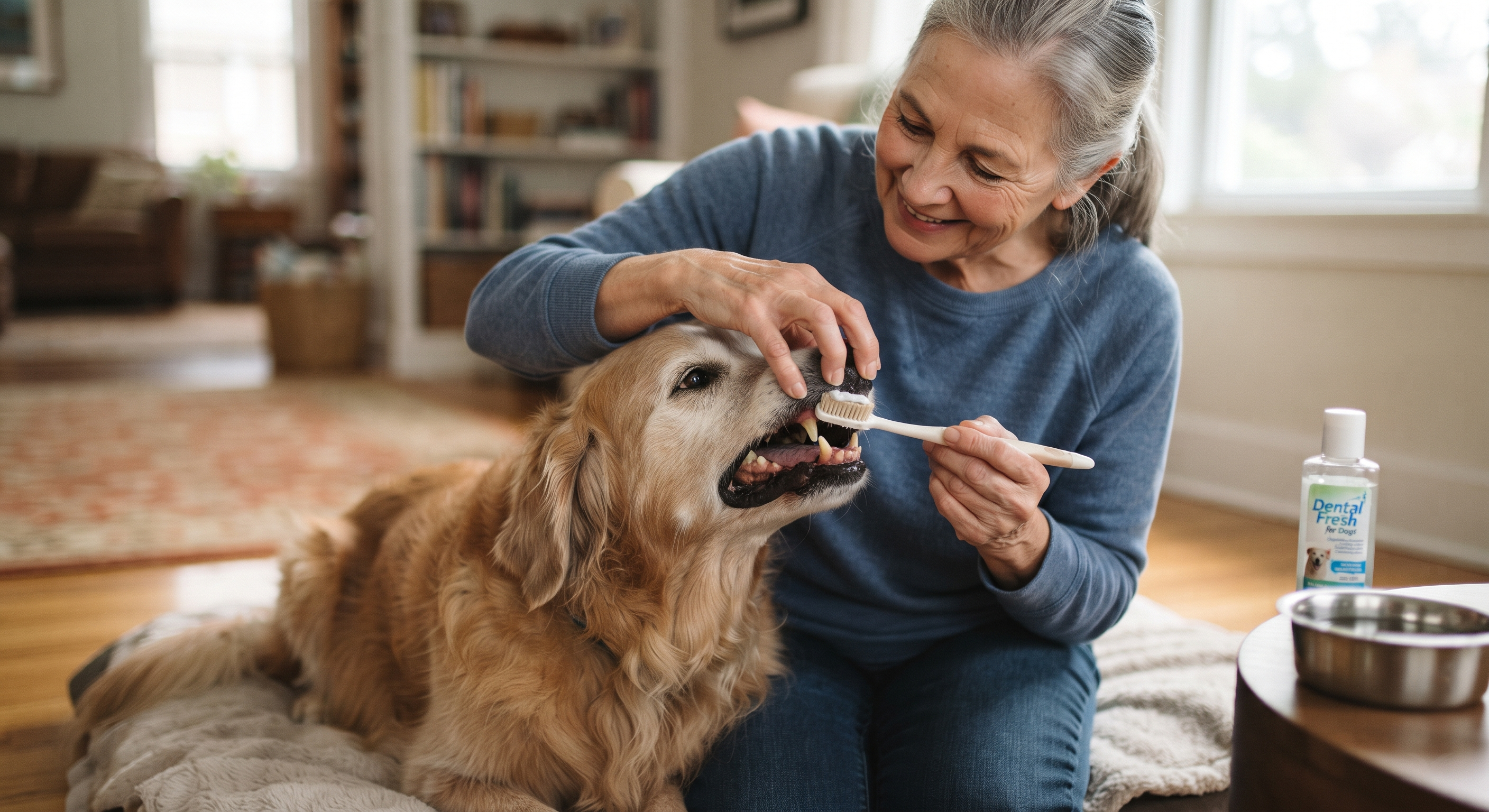
5. Adapt Enrichment and Social Time
Your dog can remain involved even when physical activity changes. Offer familiar, achievable activities: an easy food-search game, a brief reward-based training session, or quiet time together.
Make success easy. Place food where it can be found without climbing or awkward bending, count it within the daily allowance, and supervise toys or puzzles. Stop if the activity causes frustration or discomfort.
For example, you could hide a few pieces of your dog’s usual food in plain sight around one accessible room. The aim is an enjoyable activity that suits their abilities, rather than a difficult challenge.
Allow rest and choice during interactions with children, visitors, or younger animals. A senior dog should be able to retreat to a quiet space.
6. Investigate Changes in Sleep or Behavior
Nighttime pacing, getting stuck behind furniture, altered social behavior, anxiety, and toileting accidents can occur with cognitive dysfunction. However, pain, sensory loss, and other illnesses can produce similar signs. Veterinary evaluation is necessary before assuming dementia. AAHA
A predictable routine, familiar furniture layout, and gentle interaction may make daily life easier. Avoid punishment for accidents or confusion. Note the timing and circumstances so your veterinarian can assess the pattern.
If your dog becomes restless at night, record whether they also need to urinate, seem uncomfortable lying down, or appear disoriented. These details are more useful than treating every episode as the same problem.
7. Keep Grooming and Toileting Comfortable
Use short, gentle grooming sessions and let your dog rest as needed. Avoid pulling painful joints into awkward positions. Ask a veterinarian or experienced groomer for help when handling has become difficult.
Check for tangled fur, soiling, sore areas, and new skin changes while grooming. Arrange nail care appropriate to your dog’s comfort and health.
If accidents occur, offer convenient toileting opportunities and clean the skin and bedding promptly. Pads or washable covers can protect surfaces, but new incontinence still needs investigation. Absorbent products require frequent checks and changes.
Quick Comparison
Supportive bed versus a thick blanket: A supportive bed may provide more consistent cushioning, while a blanket is easy to wash and can add a familiar texture. Choose according to your dog’s comfort and ability to stand up. Very soft bedding that sinks deeply can make getting up harder for some dogs. Neither option treats the cause of ongoing pain.
Ramp versus pet stairs: A ramp avoids individual steps but needs enough space for a manageable slope. Pet stairs take up less room in some settings, yet still require stepping and balance. The suitable choice depends on the dog’s abilities and the location; some dogs should avoid both until assessed.
Standard harness versus mobility-support harness: A walking harness is designed mainly for leash attachment. A mobility-support harness is intended to assist movement when appropriately fitted and used. A handle alone does not mean a harness is safe for lifting the dog’s full weight. Ask for a demonstration before assisting a weak or painful dog.
Adult food versus senior food: An appropriate adult diet may continue to suit a healthy older dog. A senior formula may offer useful differences, but products vary. Compare nutritional suitability and calorie content with your veterinarian rather than choosing on the age label alone.
Washable pads versus disposable pads: Washable pads create ongoing laundry work, while disposable pads require repeated purchases and disposal. For either type, consider absorbency, surface stability, cleaning, and how frequently you can replace a wet pad. Pads should support hygiene alongside investigation of new accidents.
How to Choose
- Identify the problem first: Is your dog slipping, struggling to rise, having accidents, or losing weight?
- Prioritize assessment for new symptoms: Choose products that support an appropriate care plan.
- Measure accurately: Check bed space, harness fit, ramp width, and manufacturer weight limits.
- Choose stable surfaces: Test for sliding, tipping, bunching, or wobbling before use.
- Plan for cleaning: Look for removable covers, washable materials, and accessible replacement parts.
- Introduce one change at a time: Observe whether your dog uses it comfortably and willingly.
- Protect your care budget: Prioritize examinations, necessary treatment, suitable food, and basic comfort before optional accessories.
Important Safety Considerations
Do Not Give Human Pain Medicines Without Veterinary Direction
Ibuprofen, naproxen, and other human pain medicines can be dangerous for dogs. Never give aspirin or acetaminophen on your own initiative, and do not combine pain medicines or use another animal’s prescription without veterinary approval.
If your dog receives a prescribed anti-inflammatory, follow the monitoring plan and ask what side effects require action. Report vomiting, diarrhea, black stools, appetite changes, or unusual lethargy promptly. FDA
Seek Emergency Care for Severe or Sudden Signs
Difficulty breathing, collapse, prolonged or repeated seizures, inability to pass urine, and severe pain require urgent veterinary attention. A swollen abdomen with repeated unsuccessful attempts to vomit is also an emergency.
Contact an emergency clinic immediately rather than waiting for the next routine appointment. If poisoning is suspected, do not induce vomiting unless a veterinary professional instructs you to do so. vet.cornell.edu
Have New Symptoms Assessed Promptly
Increased drinking, persistent appetite changes, weight loss, repeated vomiting, new coughing, and worsening mobility need veterinary advice. Do not wait months for the next scheduled senior check.
A recent normal examination does not mean a new symptom can be ignored. Tell the clinic what has changed so the veterinary team can advise on urgency.
Review Supplements and Monitor Quality of Life
Give your veterinarian the exact names and doses of supplements before starting them. “Natural” does not guarantee safety or compatibility with medicines. AAHA advises discussing supplements with the veterinary team as part of senior care. aaha.org
Keep track of comfort, appetite, rest, mobility, toileting, and enjoyment. If bad days are becoming more frequent, discuss treatment changes, palliative care, or hospice support. Planning ahead helps you respond to your dog’s needs with clearer guidance.
Frequently Asked Questions
How often should a senior dog visit the veterinarian?
AAHA recommends physical examinations at least twice a year for senior dogs. The timing of laboratory screening and additional visits should reflect the dog’s health and treatment needs. New symptoms warrant earlier advice, even after a recent normal examination. aaha.org
Does every older dog need senior food and joint supplements?
No. Diet should match body condition, muscle condition, medical needs, and nutritional adequacy. Supplements are not automatically necessary, and their evidence and suitability vary. Ask your veterinarian which dietary changes or treatments have a clear purpose for your dog. AAHA
The Bottom Line
Start with your dog’s current abilities and the changes you have noticed. Arrange a senior health review, make daily routes easier, and preserve comfortable activities your dog still enjoys. A thoughtful care plan helps you recognize treatable problems early and make practical decisions that support your dog’s quality of life.
Editorial Sources
- AAHA — Defining the Senior Patient
- AAHA — What Should I Know About My Senior Dog?
- AAHA — Evaluating the Healthy Senior Pet
- AAHA — Nutrition
- AAHA — Pain Management
- AAHA — Managing Cognitive Dysfunction and Behavioral Anxiety
- AVMA — When Your Pet Needs Anesthesia
- FDA — Get the Facts About Pain Relievers for Pets
- Cornell University — Emergency and Critical Care