
Bringing a cat home begins long before you open the carrier door. Your new companion needs a secure environment, access to essential supplies, and time to become familiar with the people, sounds, and routines of your household.
For first-time owners, preparation can feel overwhelming. Pet stores offer everything from automatic feeders and elaborate climbing towers to designer beds and self-cleaning litter boxes. However, a useful shopping list starts with your cat’s everyday needs: eating, drinking, toileting, resting, scratching, playing, and traveling safely.
This guide explains what to prepare before bringing a cat home, how to choose practical products, and how to organize the first few days. It also covers the differences between essential purchases and optional upgrades so you can spend your budget where it matters most.
The Short Answer
Before bringing a cat home, prepare a quiet, secure space with food, fresh water, a suitable litter box, a hiding place, comfortable bedding, and a scratching surface. You will also need a secure carrier, information about the cat’s current care routine, and a plan for veterinary care. Start with straightforward supplies, then adjust your setup as you learn your cat’s preferences. vet.cornell.edu
What Should You Ask Before Bringing Your Cat Home?
Ask the shelter, rescue organization, breeder, or previous caregiver about the cat’s daily routine, health history, and behavior. This information gives you a starting point for care and helps you avoid buying products that do not suit the animal.
Prepare a written list of questions rather than trying to remember everything during collection.
What food is the cat currently eating?
Record the exact product name, whether the food is wet or dry, the usual meal schedule, and any veterinary dietary instructions.
“Chicken-flavored cat food” is not specific enough to identify the same product later. Ask for a photograph of the packaging if necessary.
Knowing the existing routine also helps you estimate how much food to purchase initially. You can discuss longer-term feeding choices with your veterinarian once you have the cat’s age, weight, and medical information.
What litter and litter box does the cat use?
Ask about:
- The litter material and brand.
- Whether it is scented or unscented.
- Whether the box is covered or uncovered.
- Any previous difficulty using the box.
This gives you a useful baseline. If you later change litter, Cornell recommends making the transition gradually rather than abruptly replacing the familiar material. vet.cornell.edu
Which records and belongings can come with the cat?
Request available vaccination records, medication instructions, veterinary reports, and microchip information. Ask whether familiar bedding or a favorite toy can accompany the cat.
Keep these documents in one folder and check that any ongoing care instructions are clear. If medication is supplied, confirm the name, prescribed dose, and timing with the treating veterinarian.
What does the caregiver know about the cat’s preferences?
Useful questions include whether the cat enjoys handling, has lived with children or other animals, and tends to hide when something changes.
Treat these answers as helpful background rather than a guarantee. Your household will have different sounds, people, and routines, so leave room to observe how the cat responds.
How Should You Prepare Your Home for a New Cat?
Begin with a manageable area where the cat can rest and access essential resources. Cats Protection recommends a quiet space away from busy household activity before introducing the wider home. Cats Protection
Choose a practical starting space
A spare bedroom or another secure room can work well. Before choosing it, consider the daily activity around that room.
For example, a room beside a frequently used entrance may be quiet at some times and busy at others. A room filled with storage boxes may offer hiding places but make it difficult to check on the cat.
Choose a space you can keep clean, inspect easily, and enter calmly.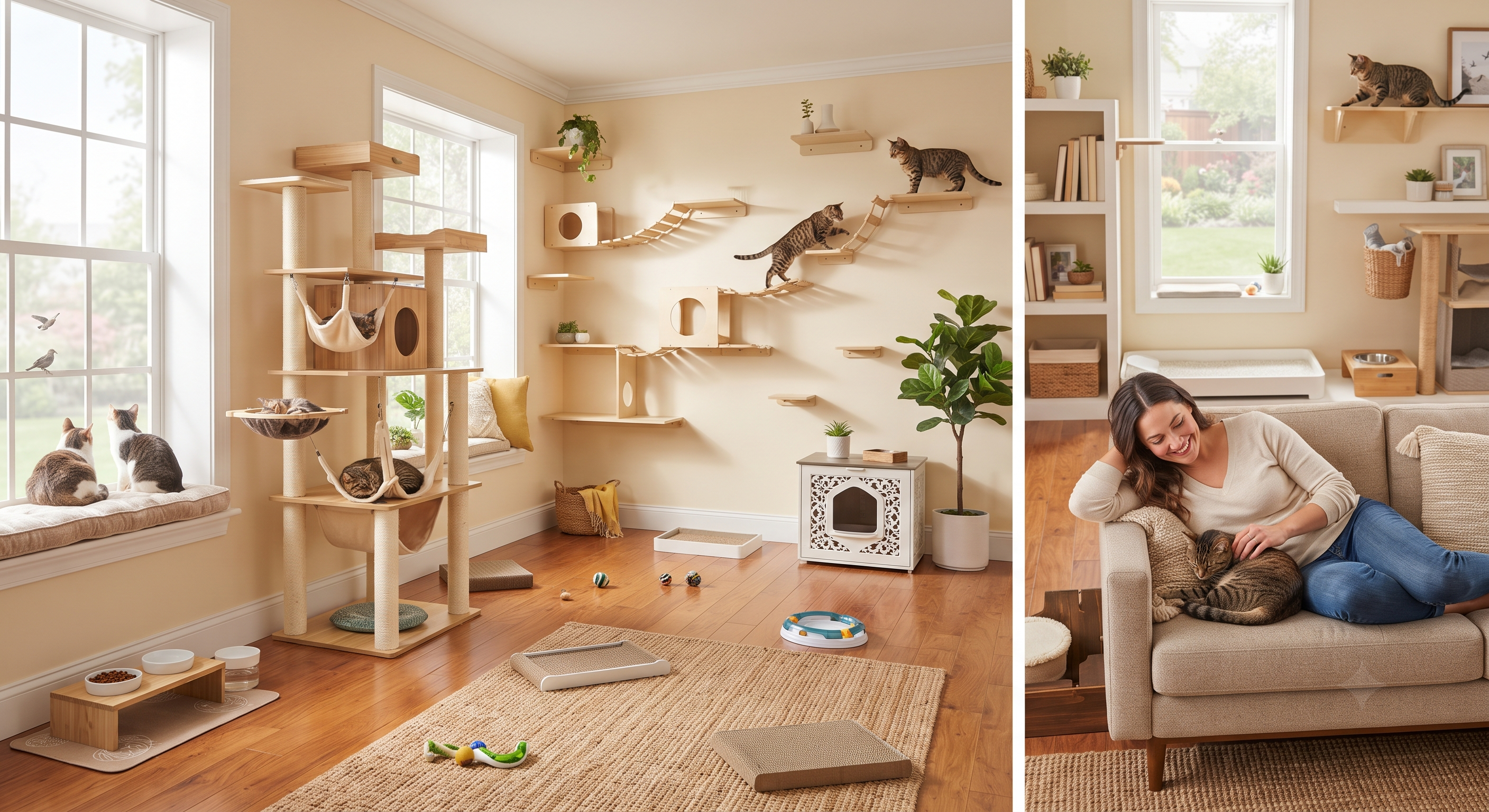
Give each resource a clear location
Sketch a simple layout before arranging the supplies. Identify where the cat will eat, drink, rest, and use the litter box.
This also helps you avoid practical problems such as blocking a doorway with a litter tray or placing the water bowl somewhere you repeatedly step over it.
Leave enough room to clean around each item. A setup that is awkward to maintain often becomes frustrating after the excitement of adoption has passed.
Check the room from floor level
Look beneath furniture, behind cabinets, and around appliances. Secure access to places where a cat could become trapped or where you could not safely retrieve it.
Check windows, balcony access, and external doors. Decide how household members will manage these openings when the cat arrives.
Make a final inspection after setting up the supplies. Packaging, loose fasteners, and discarded plastic can remain on the floor after assembling new pet products.
Which Supplies Are Essential Before Bringing a Cat Home?
Your initial purchases should cover basic care and safe transport. Cornell identifies food, a litter box, and a scratching post among the provisions to arrange before arrival. vet.cornell.edu
A secure cat carrier
You need a carrier to collect your cat and for future veterinary visits.
Before buying, inspect the actual closures and construction rather than relying only on product photographs. Consider:
- Whether the door fastens securely.
- Whether the carrier is suitable for the cat’s size and weight.
- How easily you can place the cat inside.
- Whether the interior can be cleaned.
- Whether you can carry it comfortably.
If you purchase a carrier that arrives in separate pieces, assemble it in advance and check every fastening. Keep the instructions so you can reassemble it correctly after cleaning.
Food and water dishes
Begin with dishes that are easy to wash and practical for the space available.
Check whether the bowl stays steady on your floor and whether its surface has chips, cracks, or difficult-to-clean seams. A bowl that looks attractive in a product image may be inconvenient if it slides around or requires complicated cleaning.
You do not need a matching collection of accessories. A reliable cleaning routine is more useful than decorative coordination.
A suitable litter box and litter
Choose the litter box around the cat’s size and access needs. Cornell notes that kittens and older cats with arthritis may need lower sides, and that many cats prefer an uncovered box and unscented, fine-textured litter. Individual preferences still vary. vet.cornell.edu
Add a scoop and a practical waste-disposal arrangement to your shopping list. These smaller items are easy to forget but become necessary immediately.
A resting place and hiding option
Provide somewhere comfortable to rest and somewhere the cat can retreat.
A washable blanket and a suitable cardboard box can be useful starting items. An expensive bed is an optional purchase, especially when you do not yet know whether the cat prefers an enclosed space or an open resting surface.
For kittens, keep the initial resting area safely accessible at floor level. Cats Protection specifically recommends a secure, ground-level bed when introducing a kitten. Cats Protection
A scratching surface
Choose a scratching product that stays stable during use.
Check its assembly, base, surface material, and replacement options. A low purchase price offers little value if the product needs replacing quickly or cannot remain upright.
You can start with one suitable scratching option and expand later based on what the cat uses.
A small selection of toys
Buy a few different types rather than a large multipack of near-identical items. This gives you a way to explore preferences without creating unnecessary clutter.
Inspect each toy before use. Read age guidance, supervision instructions, and cleaning information. Set aside a storage location so play items can be put away after sessions.
Cleaning supplies
Plan how you will clean bowls, bedding, the litter area, and any accidents.
Check that products are suitable for their intended use around pets, follow label instructions, and store them securely. Keep dedicated cleaning tools where practical so routine maintenance is straightforward.
How Should You Set Up the Litter Box?
Make the litter box accessible, keep it clean, and place it away from food and water. Cornell recommends one box per cat plus one extra; for multiple cats, provide boxes in different locations rather than relying on a single shared area. vet.cornell.edu
Consider access before appearance
Look at the height of the entrance, usable interior space, and the route the cat must take to reach it.
A decorative enclosure may fit your furniture, but the practical question is whether the cat can enter, turn, and leave comfortably. Consider how you will inspect and clean the box as well.
Start with a setup you can observe easily
A straightforward tray allows you to monitor litter use and understand the cat’s routine.
If you are considering an automatic model, review its suitability carefully. Check the manufacturer’s minimum age and weight requirements, safety instructions, cleaning procedure, and consumable costs.
You can research an upgrade after you understand the cat’s toileting habits.
Keep maintenance predictable
Choose a regular time to check and clean the box. Keep spare litter available so you do not need to make an unexpected substitution when the original supply runs out.
Persistent toileting changes deserve attention. Cornell explains that house-soiling can involve health conditions, litter preferences, cleanliness, location, or conflict with other animals. Buying a different box alone may not resolve the cause. vet.cornell.edu
What Should You Do on the First Day?
Bring the carrier into the prepared room, secure the room, and give the cat time to emerge. Avoid pulling the cat out or gathering everyone around it.
Cats Protection advises allowing exploration at the cat’s pace and avoiding forced interaction when the cat chooses to hide. Cats Protection
Keep the arrival simple
Have supplies ready before collection so you can focus on the cat when you return.
Postpone activities such as assembling furniture, rearranging the room, or inviting visitors to meet the new arrival. A prepared environment also makes it easier to notice whether food, water, or litter has been used.
Observe without constant interruption
Use a short written log if you are unsure what has happened while you were out of the room.
Record meals offered, food eaten, litter-box use, and any concerns. These notes can help you answer a veterinarian’s questions more accurately than a general impression such as “the cat seems quiet.”
Let household members know the plan
Agree on who will feed the cat, clean the litter box, and check doors.
This prevents double feeding and avoids the assumption that someone else has completed an essential task. Children should have clear, age-appropriate rules for interacting with the cat.
Prepare separately for existing pets
If you already have cats, arrange separate accommodation for the newcomer and plan gradual introductions. UC Davis recommends beginning with a separate room and progressing through familiarization, including scent exchange, rather than an immediate meeting. healthtopics.vetmed.ucdavis.edu
Discuss the new cat’s health status with your veterinarian before close contact with resident animals. Introducing cats or dogs successfully may require a separate plan tailored to the animals involved.
What Can You Wait to Buy?
You can delay many upgrades until you understand the cat’s preferences and your household routine.
Automatic feeders
Before buying, identify the problem you want the feeder to solve. Is it meal timing, portion delivery, or managing a specific daily schedule?
Then compare cleaning needs, food compatibility, power arrangements, and how you will check that meals were delivered. Even automated equipment needs regular human oversight.
Water fountains
A fountain is an optional addition. Consider whether you are willing to clean its components and buy replacement parts or filters.
Keep the maintenance instructions before choosing a model. A device that is easy to purchase but inconvenient to clean may not be a useful upgrade.
Large cat trees
Measure the available area, including the space around the tree. Check assembly requirements and whether replacement scratching sections are available.
Your first purchase does not need to be the largest model. Learn where the cat spends time before committing to a substantial piece of furniture.
Multiple beds and accessories
Start with a limited number of resting options. Photograph or note the places the cat chooses, then use those observations to guide later purchases.
This approach can help you avoid filling the home with products that rarely get used.
Quick Comparison
Basic supplies versus automated equipment
Basic supplies generally make it easier to see how each care task is being completed. You can inspect a bowl directly, clean a conventional tray, and replace an individual item without dealing with connected components.
Automated equipment may help with a particular routine, but it introduces additional questions about maintenance, compatibility, power, and reliability. Choose it to solve a clear need after reviewing its instructions.
A simple litter tray versus a covered enclosure
A simple tray offers direct access for cleaning and observation. A covered design may suit some homes and cats, but appearance should not outweigh comfortable access.
Cornell notes that covered boxes can retain odors and that preferences differ. If the cat avoids a particular design, reassess the setup rather than insisting on it. vet.cornell.edu
A washable blanket versus a dedicated cat bed
A washable blanket is an inexpensive starting option that you can move or replace easily. A dedicated bed may offer a particular shape or enclosure that your cat enjoys.
The useful comparison is how each option fits the cat’s preference, your cleaning routine, and the available space.
Buying everything at once versus buying in stages
Buying everything at once may feel organized, but it requires decisions before you have much information about the cat.
Buying essentials first leaves room to adapt. Keep a list of possible upgrades and revisit it after observing which products are used and which tasks need improvement.
How to Choose
Use these criteria when selecting products for a new cat:
- Start with a defined need. Identify the care task the product will support.
- Check actual dimensions. Measure your space and confirm suitable sizing.
- Inspect construction. Look at closures, edges, joints, and stability.
- Read the instructions before purchase when available. Check age limits, maintenance, and supervision requirements.
- Consider ongoing costs. Include filters, liners, replacement parts, and other consumables.
- Choose manageable cleaning routines. Equipment should fit the time you can consistently give it.
- Keep familiar options available. Ask the previous caregiver what the cat already uses.
- Review return policies. Keep receipts and packaging where practical.
- Reserve money for care. Include veterinary visits and unexpected expenses in your budget.
Important Safety Considerations
Remove toxic plants before arrival
Check every plant and bouquet already in the home.
The ASPCA warns that true lilies in the Lilium group and daylilies in the Hemerocallis group can cause life-threatening kidney injury in cats. Leaves, petals, stems, and pollen can be harmful. If exposure is suspected, contact a veterinarian immediately rather than waiting for symptoms. ASPCA
Use parasite products only as directed for the cat
Do not assume a product intended for dogs is suitable for cats. The ASPCA identifies concentrated permethrin-containing products as a particular feline hazard. Ask your veterinarian which treatment is appropriate and follow the product instructions. ASPCA
Take loss of appetite seriously
Do not automatically attribute refusal to eat to the move.
Cornell notes that sustained loss of appetite can seriously affect an adult cat within as little as 24 hours, with very young kittens at risk sooner. Contact your veterinarian promptly if the cat stops eating; seek advice earlier for kittens, cats with medical conditions, or cats showing other concerning signs. Do not treat 24 hours as a required waiting period. vet.cornell.edu
Treat possible urinary blockage as an emergency
Repeated straining with little or no urine requires immediate veterinary attention. Cornell identifies urethral obstruction as a true medical emergency. Do not wait to see whether changing the litter box helps. Cornell University College of Veterinary ...
Arrange veterinary care and identification
Check existing records and arrange a veterinary appointment appropriate to the cat’s needs. Discuss vaccination, parasite prevention, neutering, identification, and any ongoing treatment.
If the cat has a microchip, confirm how to update the registered contact details. Keep your regular clinic’s number and the nearest emergency service somewhere easy to find. Cats Protection
Frequently Asked Questions
Do I need an expensive setup before adopting a cat?
No. Prioritize functional essentials, safe surroundings, and money for ongoing care. You can add specialized equipment after identifying a specific need.
Should I buy kitten-sized supplies?
Check the kitten’s current access needs and the product’s guidance. Some items can accommodate growth; others may need replacing. Avoid choosing a large product solely to save a later purchase if it is unsuitable for the kitten now.
Is it normal for a new cat to hide?
Hiding can occur while a cat adjusts to an unfamiliar environment. Allow a safe retreat and avoid forcing interaction. Monitor eating, drinking, toileting, and general condition so hiding does not prevent you from noticing a problem. Cats Protection
Should I change the cat’s food immediately?
Ask what the cat currently eats and obtain any dietary instructions. Discuss a change with your veterinarian, especially if the cat has a medical condition or prescribed diet.
How many litter boxes should I prepare?
Cornell recommends one litter box per cat plus one extra. Consider their locations and accessibility as well as the total number. vet.cornell.edu
Can my new cat meet my other cat immediately?
Plan a gradual introduction with separate resources and a secure initial room. UC Davis recommends a staged approach that begins before direct contact. healthtopics.vetmed.ucdavis.edu
How long will it take the cat to settle?
There is no dependable deadline for every cat. Watch behavior and essential routines rather than expecting progress by a particular day. If you are concerned about the cat’s health or ability to cope, seek veterinary advice.
What should I buy first if my budget is limited?
Begin with a secure carrier, suitable food, food and water dishes, litter boxes and litter, a scratching surface, basic bedding, and cleaning supplies. Set aside a care budget before purchasing optional technology or decorative accessories.
The Bottom Line
Prepare the essentials before collection, learn as much as possible about the cat’s existing routine, and keep the first days calm and manageable. Use your observations to guide later purchases.
A practical home setup should make daily care easy to complete and help you notice when your cat needs attention. Start with supplies you can maintain consistently, then improve the arrangement as you learn what works.