Bringing a kitten home is exciting, but preparing for that first day can feel surprisingly complicated. Pet stores offer everything from automatic feeders and elaborate climbing towers to heated beds and dozens of litter options. For a first-time owner, it can be difficult to know which purchases deserve attention and which can wait.
A useful new kitten checklist starts with everyday needs: safe transportation, suitable food, clean water, accessible toileting, comfortable rest, and opportunities to scratch and play. Once those basics are covered, you can choose additional products based on your kitten’s behavior and your household routine.
This guide explains what to prepare before your kitten arrives, how to evaluate common supplies, and how to create a practical setup without buying unnecessary equipment. It focuses on weaned kittens coming into a home; newborn, orphaned, or medically vulnerable kittens need an individual care plan from a veterinarian.
The Short Answer
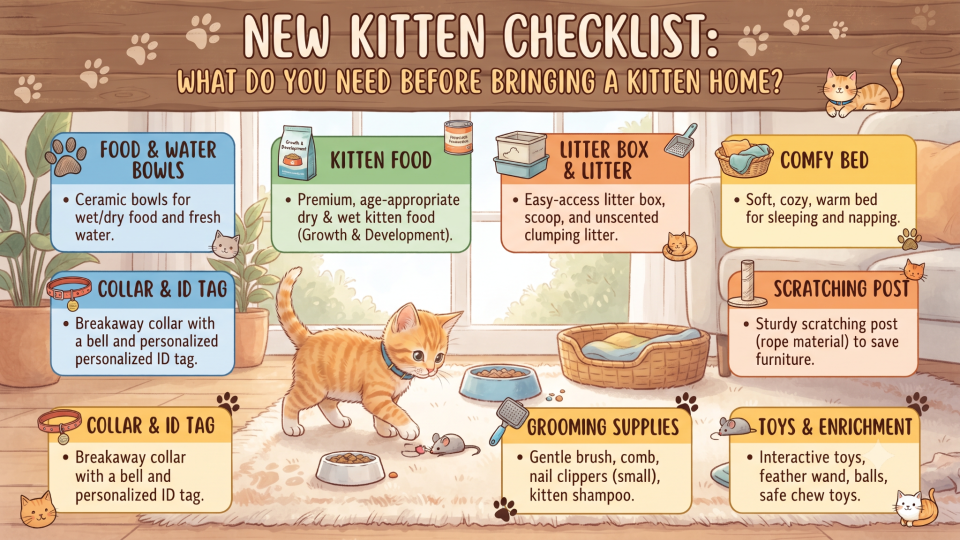
Before bringing a kitten home, prepare a secure carrier, appropriate kitten food, separate food and water bowls, an accessible litter tray, suitable litter, a comfortable resting area, a scratching surface, and a few carefully chosen toys. Set these up in a quiet, kitten-proofed room and arrange veterinary care. Start with simple, functional equipment, then add products as you learn what your kitten prefers.
What Should You Find Out Before Buying Kitten Supplies?
Ask the shelter, breeder, foster carer, or previous owner about the kitten’s current food, litter, daily routine, and health records. These details help you prepare a familiar starting environment instead of changing everything at once.
Cats Protection recommends initially using the food and litter a kitten already knows, with gradual changes when needed. Cats Protection
Before collecting your kitten, request the following information:
- The exact name and variety of their current food.
- Whether they eat wet food, dry food, or both.
- Their usual feeding routine.
- The type of litter and tray they use.
- Any medication or ongoing health concerns.
- Vaccination, parasite treatment, and microchip records.
- Details of any planned veterinary follow-up.
Keep this information together in a folder or digital document. Photograph food packaging if the product name is unclear, and ask for written instructions rather than relying on memory during an exciting collection day.
You can also ask whether a small piece of familiar bedding can come home with the kitten. Discuss how to transport it safely and whether any cleaning is needed.
This preparation makes shopping more precise. Instead of buying several foods to discover what works, you can begin with an appropriate familiar option and discuss future changes with your veterinarian.
Which Kitten Supplies Should You Buy First?
Prioritize products that your kitten will use immediately and that you can clean, inspect, and replace easily.
A Secure Cat Carrier
The carrier should be ready before collection day. Check that the door closes securely, ventilation openings are unobstructed, and the body has no cracks or damaged seams.
When comparing carriers, consider practical questions:
- Can you reach the kitten without struggling through a narrow opening?
- Can the lining be removed and washed?
- Is the base supportive?
- Can the carrier be transported according to its instructions?
- Will you need a larger model as the kitten grows?
A removable top can make access easier, while a washable liner simplifies cleaning after travel accidents. Soft-sided models may be easier to store, but their closures and structure deserve careful inspection.
Before leaving home, assemble the carrier and test every latch. Place an absorbent liner inside and pack a spare. Avoid leaving loose accessories inside that could obstruct movement.
Appropriate Kitten Food
Choose food intended to provide complete nutrition for growth. International Cat Care distinguishes complete foods from complementary products, which do not supply a full diet on their own. Its kitten guidance also recommends small, frequent meals and keeping suitable familiar food during the transition into a new home. icatcare.org
Read the nutritional statement rather than relying on pictures or words such as “premium” on the front of the package. If the label is unclear, ask your veterinarian whether the product is suitable as your kitten’s main food.
For shopping purposes, note:
- The package size.
- Storage instructions after opening.
- How easily the product is available locally.
- Whether you can buy smaller quantities initially.
- Any feeding instructions that require veterinary clarification.
Avoid buying a large stock of unfamiliar food before you know whether it will be appropriate.
Separate Food and Water Bowls
Choose bowls that are stable, easy to wash, and free from damaged surfaces. Stainless steel and glazed ceramic are common options; assess the quality of the individual product.
A spare bowl is useful when another is being washed. Check that the bowl fits your planned feeding area and that it does not slide easily across the floor.
Blue Cross recommends placing food and water in separate locations. Its kitten preparation guide also advises discussing the kitten’s existing diet before making changes.
A water fountain is an optional later purchase. If you buy one, compare cleaning access, replacement parts, filter availability, and recurring costs. Keep a conventional water bowl available rather than making drinking dependent on powered equipment.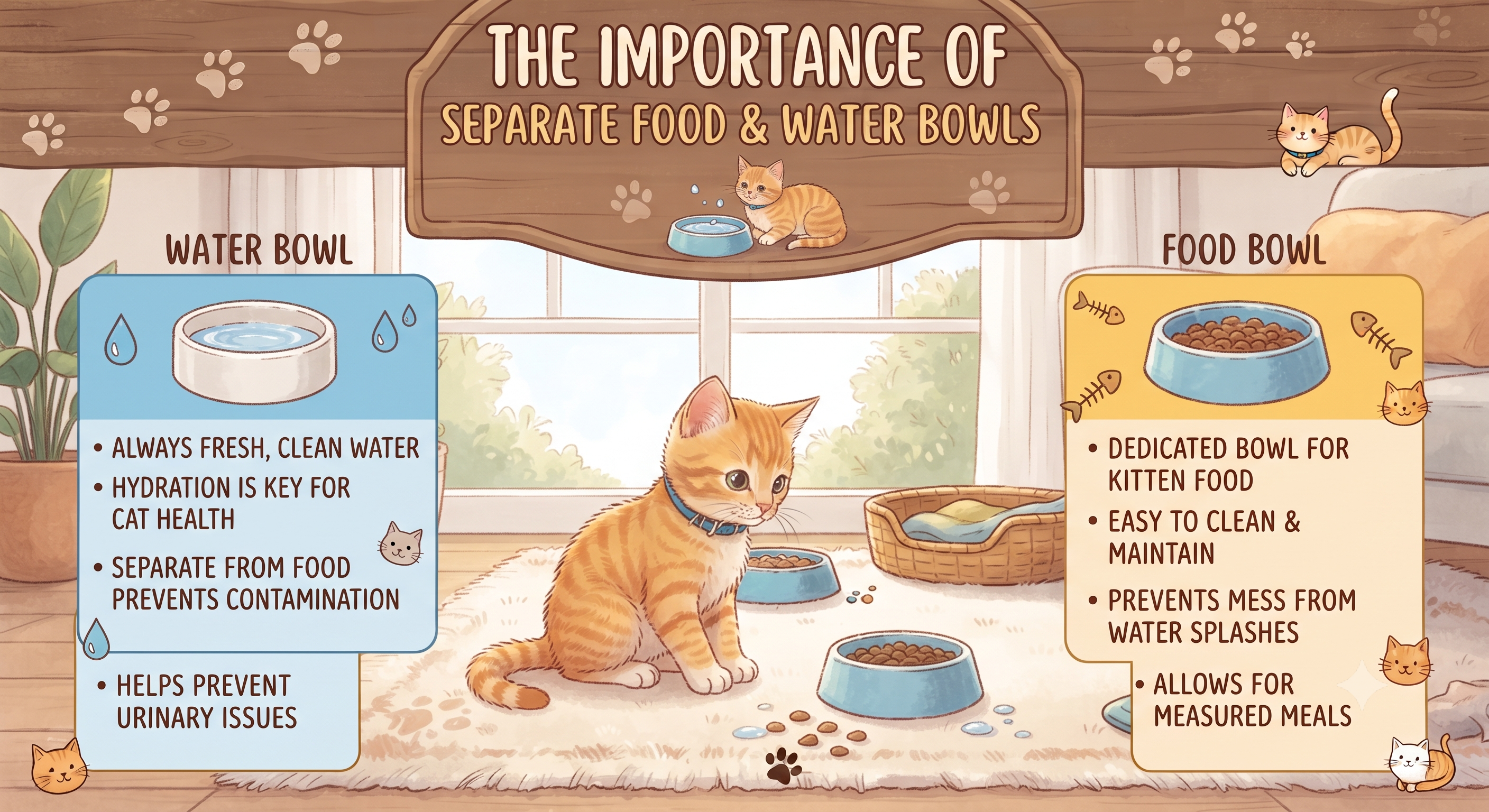
An Accessible Litter Tray
For a small kitten, inspect the entry height before buying. A tray can look spacious in a product photograph while still being awkward to enter.
Consider where you will place it and whether you can reach it easily for cleaning. An elaborate design offers little convenience if servicing it requires moving furniture.
International Cat Care advises keeping trays away from food, water, noisy appliances, and busy routes through the home. It also recommends separate tray locations and accessible facilities across floors where needed.
Before choosing a covered or automatic system, check the manufacturer’s minimum age and weight requirements. Keep a simple, accessible tray available while evaluating new equipment.
Litter and Cleaning Supplies
Begin with a suitable litter your kitten already knows. Purchase a scoop compatible with that litter, waste bags or an appropriate disposal container, and cleaning tools reserved for the tray.
Think about the entire cleaning process:
- Where will the scoop be stored?
- How will used litter be disposed of?
- Where can you wash the tray?
- Can you clean without leaving supplies accessible to the kitten?
- Does the litter have specific disposal restrictions?
An easy routine is more useful than a product that looks attractive but creates extra work.
A Comfortable Resting and Hiding Area
A washable bed or blanket provides a practical starting point. Check for exposed stuffing, loose threads, insecure decorations, and removable covers that can be cleaned.
You can also prepare a sturdy cardboard hiding box with a clean blanket, provided it has no staples, sharp edges, or loose tape. Position it somewhere accessible so you can observe the kitten without repeatedly moving it.
There is little reason to buy several beds immediately. Start with one or two simple resting options and see where the kitten chooses to settle.
A Stable Scratching Surface
Compare scratchers by stability, usable surface area, and ease of replacement. Press gently against a display model or assembled product to see whether it rocks.
A compact vertical post and a horizontal scratching pad offer different options without requiring a large initial purchase. Leave clear space around them so they are easy to approach.
Cats Protection includes scratching, hiding, sleeping, and play opportunities in its recommendations for helping a kitten settle. It also advises playing with appropriate toys rather than hands or feet. Cats Protection
A Small Selection of Toys
Start with a few different designs instead of a large bundle. Product variety helps you observe preferences; quantity alone does not make a setup better.
Inspect each toy for:
- Parts that detach easily.
- Loose bells, eyes, or decorations.
- Long threads or damaged stitching.
- Openings that could trap a paw.
- Components small enough to swallow.
Separate toys intended for supervised play from those you leave available. A wand toy, for example, should be put away after the session rather than left dangling from furniture.
How Should You Prepare Your Home Before Your Kitten Arrives?
Prepare one quiet starting room, organize the supplies, and remove foreseeable hazards before collection day.
Cats Protection recommends a safe sanctuary room and gradual exploration at the kitten’s pace. Cats Protection
Plan the Layout Before Placing Products
Measure the space you have available. Decide where the resting area, feeding area, water, and litter tray will go before buying bulky furniture.
A useful room should let you:
- Reach the tray for cleaning.
- Refresh food and water without moving equipment.
- Inspect hiding places.
- Sit quietly without blocking the kitten’s route.
- Open the door without creating an easy escape path.
Keep the layout simple enough that daily care feels manageable.
Inspect the Room From Floor Level
Look beneath furniture and behind appliances. Identify openings that a kitten might enter but that you could not easily reach.
Secure accessible cords, remove small loose objects, and store bags and packaging. Check windows, screens, and door closures rather than assuming they are secure.
Cornell identifies household chemicals and medications as potential poisoning hazards for cats. Store them out of reach and clean spills promptly. vet.cornell.edu
Set Household Rules
Agree on care responsibilities before the kitten arrives. Decide who feeds, who cleans the tray, and who books veterinary appointments.
If children live in the home, explain that the kitten needs places where it can rest undisturbed. Avoid turning the arrival into a busy event with many visitors.
Keep a care checklist somewhere visible. A simple written record helps prevent duplicate feeding and makes it easier to notice changes in routine.
Which Products Can Wait Until Later?
Many optional products are easier to evaluate after you have observed your kitten.
Automatic Feeders
Before purchasing, check food compatibility, portion controls, cleaning access, and what happens during a power interruption. Test the equipment while you are present.
Consider whether automation solves an actual scheduling problem. It still requires checking food delivery and observing the kitten.
Large Cat Trees
Measure floor space and ceiling height, and compare base dimensions rather than judging only by overall height. Check assembly instructions, replacement parts, and whether you can tighten fittings as needed.
A large structure may be worthwhile later, but a modest starting setup lets you learn which climbing and resting areas your kitten uses.
Smart Cameras
A camera can make remote observation more convenient. Compare placement, subscription costs, recording settings, and privacy controls.
Use it as an observation tool. Plan how someone could attend to the kitten if you notice a problem while away.
Decorative Accessories
Matching storage containers and elaborate beds may suit your home, but they do not need to be first-day priorities. Buy them once essential care costs and space requirements are clear.
Quick Comparison
Hard-Sided vs. Soft-Sided Carriers
A hard-sided carrier is a practical option for owners who want a sturdy structure and surfaces that are easy to wipe clean. Depending on the model, a removable top can also make it easier to access your kitten. Its main drawback is storage: most rigid carriers take up space even when they are not being used.
A soft-sided carrier is often lighter, and some models fold down for storage. However, construction varies, so inspect the zippers, seams, ventilation panels, and supportive base carefully. Whichever design you choose, prioritize secure closures, adequate space, and straightforward cleaning.
Open vs. Covered Litter Trays
An open litter tray makes it easy to see when cleaning is needed and usually provides convenient access for scooping. Check that the entrance is low enough for your kitten and that the tray offers enough usable space. A separate litter mat may help manage scattered litter.
A covered tray can contain some scattered litter, but its entrance and interior may be less accessible. The cover also adds another surface to clean. If you choose one, assess the opening, ventilation, and ease of removing the lid rather than selecting it mainly for appearance.
Stainless Steel vs. Ceramic Bowls
Stainless steel bowls are generally lightweight and easy to wash. Some models slide across smooth floors, so look for a stable base and inspect the finish for rough or damaged edges.
Ceramic bowls are often heavier, which can help keep them in place. However, they can chip or crack if dropped. Choose a bowl intended for feeding pets, follow its cleaning instructions, and replace it if the surface becomes damaged.
For either material, convenient cleaning and stability matter more than decorative details.
Water Bowls vs. Water Fountains
A conventional water bowl provides a simple drinking option without electricity, filters, or moving parts. It is easy to inspect, refill, and clean.
A water fountain adds a powered drinking option but requires more maintenance. Before buying one, check whether you can reach all the components for cleaning, how often filters need replacing, and whether replacement parts are readily available. Keep a separate water bowl available if the fountain stops working or needs servicing.
Vertical Scratching Posts vs. Horizontal Scratching Pads
A vertical scratching post offers an upright surface, but its usefulness depends partly on its stability and usable height. Check that the base remains steady and that the scratching material is securely attached.
A horizontal scratching pad is usually compact and easy to place or replace. Some materials shed debris, so consider cleanup and durability when comparing products.
Starting with one of each gives you an opportunity to observe which scratching position your kitten prefers before investing in larger furniture.
How to Choose
Use the following principles when selecting kitten supplies:
- Start with immediate needs. Buy transport, feeding, toileting, resting, and play supplies before optional electronics.
- Use actual measurements. Compare entry heights, bowl dimensions, carrier openings, and furniture footprints.
- Check instructions before buying. Age limits, cleaning requirements, and replacement parts can affect suitability.
- Choose equipment you can maintain. Products with inaccessible corners or complicated assembly may create avoidable work.
- Plan for recurring costs. Food, litter, filters, replacement scratchers, and veterinary care matter beyond the initial purchase.
- Keep suitable familiar supplies available. Introduce changes thoughtfully rather than replacing every part of the routine.
- Read reviews for specific evidence. Photos, measurements, and descriptions of everyday maintenance are more useful than vague praise.
- Buy fewer unfamiliar items initially. Leave room to adapt once you know the kitten’s preferences.
- Keep veterinary funds in the budget. A decorative upgrade should not displace necessary care.
Important Safety Considerations
Keep Toxic Plants Out of Reach
True lilies and daylilies pose a serious poisoning risk to cats. UC Davis explains that exposure can include eating plant material, licking pollen, or drinking water from a vase containing lilies. Suspected exposure requires immediate veterinary attention; do not wait for symptoms. healthtopics.vetmed.ucdavis.edu
Check plants and bouquets before bringing them indoors. A plant’s common name can be confusing, so verify the species when uncertain.
Store Medicines and Chemicals Securely
Human medications and some flea treatments intended for dogs can be acutely toxic to cats. Never give medication without veterinary guidance, and choose parasite products appropriate to the kitten’s age and weight. vet.cornell.edu
Keep product packaging and treatment records so your veterinarian can identify exactly what has been used.
Seek Help Promptly After Suspected Poisoning
Contact a veterinarian or emergency veterinary service immediately if you suspect toxic exposure. Bring the product label or a photograph when safe to do so. Do not induce vomiting unless a veterinary professional specifically directs you. vet.cornell.edu
Save your regular clinic’s number and an emergency contact before the kitten arrives.
Inspect Equipment Regularly
A product that was intact when purchased can become damaged through chewing, scratching, washing, or repeated assembly.
Add a quick inspection to your cleaning routine. Replace damaged toys, tighten furniture fittings, check carrier closures, and remove bowls with chipped or broken surfaces.
Use Veterinary Guidance for Individual Care
A shopping checklist cannot determine the right vaccination schedule, parasite treatment, diet changes, or care for an unwell kitten. Bring previous records to the veterinary appointment and ask for an individual plan.
For a newborn or unweaned kitten, seek veterinary help promptly. Their feeding and care requirements differ from the household setup described here.
Frequently Asked Questions
What Are the Most Important Things to Buy Before Bringing a Kitten Home?
Start with a secure carrier, appropriate food, food and water bowls, a litter tray and litter, bedding, a scratching surface, and a few suitable toys. Prepare the room and cleaning supplies before collection day.
The goal is to make essential care possible immediately, without needing an urgent shopping trip.
Do I Need an Expensive Bed?
No. Begin with a safe, washable resting option that fits the available space.
Check construction and cleaning instructions before considering appearance. You can upgrade later if you discover a practical need.
Should I Buy a Water Fountain Immediately?
A fountain can wait while you assess your setup. Fresh drinking water should be available regardless of whether you use powered equipment. icatcare.org
If you later purchase a fountain, consider maintenance time and the availability of replacement filters.
Can Two Kittens Share All Their Supplies?
Do not assume one set of supplies will be sufficient. Cats Protection advises providing separate essential resources even for kittens from the same litter. Cats Protection
Budget for the additional equipment and space before deciding to bring home a pair.
How Many Toys Should I Buy?
Begin with a small selection that offers different ways to play. Observe which designs are used, inspect them regularly, and replace damaged items.
There is no need to purchase a large collection before learning the kitten’s preferences.
Should I Change the Kitten’s Food as Soon as They Arrive?
If the current food is an appropriate complete kitten diet, keeping it initially avoids an unnecessary change during the move. International Cat Care advises gradual diet transitions rather than sudden switches. icatcare.org
If you are concerned about the current food, ask your veterinarian how to transition safely.
What Should I Bring on Collection Day?
Bring the assembled carrier, a washable or disposable liner, a spare liner, and the details needed for the handover.
Collect written care instructions and health records. Keep everything together so it is available for the first veterinary appointment.
How Can I Avoid Overspending?
Separate purchases into three categories: needed before arrival, useful after observation, and optional.
Buy reliable essentials first, compare maintenance costs, and delay bulky or electronic products until you know what problem they will solve.
The Bottom Line
Prepare a functional home before building a collection of pet products. A secure carrier, suitable feeding and toileting equipment, a comfortable resting area, and simple scratching and play options give you a practical starting point.
Before collection day, confirm the kitten’s current routine, check the room for hazards, and organize veterinary records. Then make future purchases based on what you observe and what your kitten needs.
Editorial Sources
- Cats Protection — Bringing a New Kitten Home
- International Cat Care — Caring for Your New Kitten
- Blue Cross — Bringing Your Kitten Home
- Cornell University College of Veterinary Medicine — Common Cat Hazards
- UC Davis School of Veterinary Medicine — Lily Toxicity in Cats