
Imagine a weekday morning in Europe. Someone fills a reusable bottle before catching the train. A parent packs sandwiches into a lunch box. A shopper picks up a shampoo bar at a local drugstore. At a café in Germany, a customer orders coffee in a returnable cup and drops it off at another participating location later.
These are different approaches to the same practical question: how can everyday products do their job while creating less avoidable waste?
The answer is becoming easier to explore through products sold by familiar retailers and brands. Reusable bottles, returnable takeaway packaging, solid toiletries, refillable cleaning products, and durable food containers all offer ways to change ordinary routines. Repairable electronics extend that thinking to purchases we expect to keep for years.
Europe is not a single market, however. Products, refill services, and return networks vary between countries and cities. A system that works well in Germany may be unavailable elsewhere, and a brand sold in several countries may offer different ranges in each one.
This guide examines six product categories with current European-market examples. It uses manufacturer, retailer, and official information checked in September 2026. The examples illustrate available options rather than a Europe-wide sales ranking or a claim that every product has been independently tested.
The Short Answer
Eco-friendly product options available in European markets include reusable water bottles, returnable takeaway cups, shampoo bars, refillable household cleaners, reusable lunch boxes, and repairable smartphones. Examples include Chilly’s, RECUP, alverde at dm, Ecover, Mepal, and Fairphone. Their value depends on what they replace, how often you use them, and whether the refill, return, maintenance, or repair options fit your life.
What Makes These Products Relevant to Everyday Life in Europe?
They address recurring needs: drinking, eating, washing, cleaning, and staying connected. That makes them more useful starting points than a shopping list built around environmental slogans.
The strongest examples also show that sustainability involves both products and the systems around them. A refillable bottle needs an accessible supply of refills. A returnable cup needs convenient return points. A repairable phone needs spare parts and instructions.
There is visible evidence of these options reaching beyond specialist shops. German retailer dm lists several solid shampoos in its regular hair-care range. Its alverde brand has a presence across 14 European countries, although individual products and stock vary by market. RECUP reports around 20,000 partner locations in Germany for its reusable food and drink packaging system.
Those facts demonstrate retail reach or network scale for particular examples. They do not prove that every household uses these products or that every category is equally popular throughout Europe.
A useful way to approach the following options is to ask: which one would change something I already do frequently?
1. Are Reusable Water Bottles a Good First Step?
Yes, if you regularly buy drinks while away from home and can refill a bottle conveniently. They offer a straightforward way to replace a repeated disposable purchase with an item you keep using.
Chilly’s is one European-market example. Its current range includes reusable metal bottles in different sizes and designs, and the brand operates country-specific storefronts, including for Germany and Greece. Product ranges and availability should be checked in the relevant market.
Why this category matters
A bottle is a good reminder that environmental value depends on behavior. Buying one is easy. Remembering it, refilling it, and cleaning it are what turn ownership into regular use.
For someone who buys bottled water on most workdays, a reusable bottle can address a clear routine. For someone who already carries a functional bottle, a new purchase may add little. You do not need to replace an existing bottle simply because a newer model looks more sustainable.
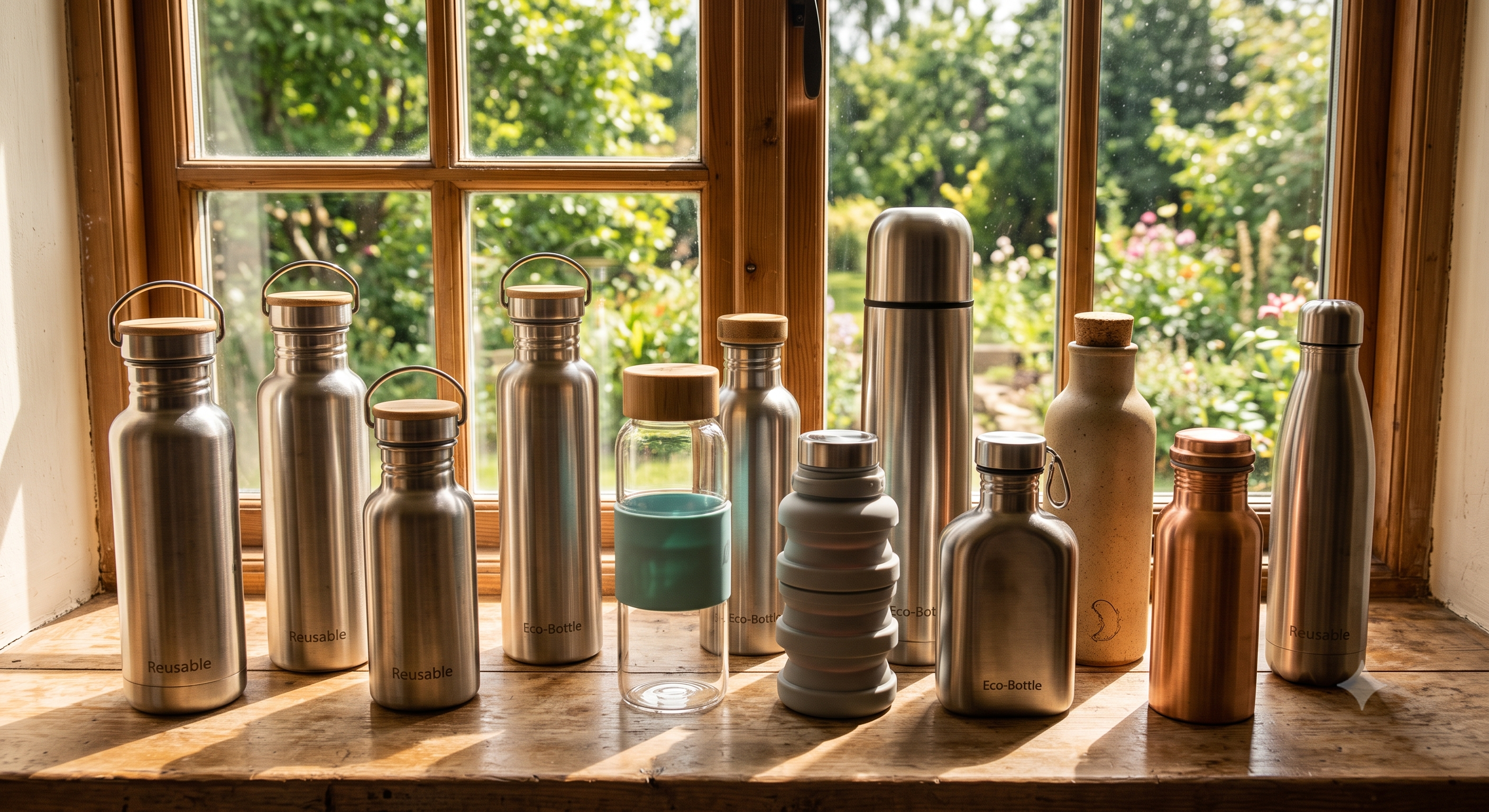
What makes a bottle practical?
Capacity is one consideration, but bigger is not always better. A large bottle can become heavy and inconvenient. A smaller one may work well if you have reliable refill opportunities.
Also consider:
- Whether it fits your bag or bottle holder.
- How easy the opening is to clean.
- Whether the lid is comfortable to use.
- Whether the product is intended for your preferred drink.
- Which parts can be replaced if they wear out.
An insulated bottle may suit long journeys or people who prefer temperature control. A simple bottle may be enough for a short commute. Choose the features you will use rather than buying the most elaborate option.
What to watch out for
Cleaning requirements vary. Chilly’s publishes care guidance that includes washing with soapy water, rinsing, and drying with the cap off. It also cautions about cleaning methods that may affect seals or linings. Follow the guidance for your exact bottle instead of assuming every reusable bottle is dishwasher-safe.
Best fit: Someone with a frequent drinking routine, convenient access to suitable refill water, and a bottle they are willing to carry.
2. How Do Returnable Takeaway Cups Work?
They let you borrow a reusable container, use it, and return it through a participating network. This offers an alternative for people who want takeaway drinks without owning or remembering a personal cup.
RECUP is a clear example in Germany. According to the operator, customers pay a deposit when ordering food or drinks in its containers and receive the deposit back when returning them. The company currently reports about 20,000 partner locations in Germany.
Why the return network matters
A returnable cup is more than a different material. It belongs to a service designed to circulate containers among customers and businesses.
That can be convenient when participating cafés are near your home, office, or usual travel route. You do not have to keep accumulating travel cups, and you can return a borrowed container when finished.
However, convenience is local. Before relying on a system, check the operator’s map. A large national network does not guarantee a nearby return point for your particular journey.
What environmental problem does it address?
The aim is to replace repeated use of disposable takeaway packaging with containers that remain in service. UNEP’s life cycle work encourages approaches that keep resources useful for longer, including reusable systems. The actual comparison still depends on repeated circulation, cleaning, transport, and how the system operates.
Returning the cup is therefore part of using the product properly. Keeping borrowed containers indefinitely undermines the purpose of a shared system.
Who may prefer a personal cup?
A personal cup may suit someone who always visits a café that accepts it and has an established cleaning routine. A deposit system may suit someone who forgets a cup or buys drinks spontaneously.
Neither option needs to be treated as universally better. The useful question is which one you will use consistently.
Best fit: Regular takeaway customers whose usual cafés and travel routes include convenient participating return points.
3. Why Are Shampoo Bars Worth Considering?
Shampoo bars offer a different format for a familiar product, and they are available through mainstream European retail channels. They can be worth trying if you want a compact toiletry and a washing routine that does not depend on another liquid-shampoo bottle.
Germany’s dm sells several solid shampoos, including alverde products. One current example is its 60-gram Almond Oil & Shea Butter shampoo bar. The retailer provides ingredients and directions, including rinsing thoroughly and allowing the bar to dry after use.
Why the format can be useful
A solid product may be convenient for travel or a small bathroom. It can also give shoppers an opportunity to inspect how much packaging comes with their usual toiletries.
But “solid” is not a complete environmental assessment. Check the actual wrapping, the amount you use, how long the product lasts in your routine, and whether you finish it. A bar you dislike and abandon is unlikely to be a satisfying purchase.
There is no reliable universal conversion between one shampoo bar and a particular number of liquid bottles. Hair length, washing frequency, formulation, and storage all affect how quickly a product is used.
How to choose a suitable bar
Start with your hair-care needs. Look at the product’s intended use and ingredient list, just as you would for liquid shampoo. A natural-cosmetics label does not tell you whether a particular formulation will suit your hair or scalp.
Avoid buying several bars before trying one. Use a small trial period to assess whether it cleans effectively, feels comfortable, and fits your routine.
Storage matters too. A bar left in standing water may become inconvenient to handle. Follow the manufacturer’s drying instructions and use a storage method that suits the product.
What should not be assumed?
A shampoo bar is not automatically fragrance-free, free of potential allergens, or appropriate for everyone. “Natural” describes a claim about ingredients or production; it does not establish personal suitability.
This article does not claim that the named shampoo has a measured lower carbon footprint than every liquid alternative. It is an example of a widely accessible product format worth evaluating.
Best fit: Someone interested in a compact toiletry who is willing to choose a suitable formulation and keep the bar dry between uses.
4. Can Refillable Cleaning Products Make a Practical Difference?
They can help you keep using a container instead of replacing it each time the contents run out. Their usefulness depends on refill availability, cleaning performance, and safe handling.
Ecover provides a current example. Its official information describes home-refill formats and refilling through some independent stockists, with options including washing-up liquid, laundry liquid, and all-purpose cleaner. Formats and services differ by market, so check your local supply.
Why refills need to be convenient
A refill system works best when it fits an existing shopping trip or when a home-refill size is manageable. If obtaining a refill involves a difficult special journey, you may be less likely to continue.
Before switching, ask:
- Can I buy the same refill regularly?
- Is the container designed for continued use?
- Do I have enough space to store a larger refill?
- Can I dispense it without spills or confusion?
- Is the cost sensible for the quantity I actually use?
The refill’s packaging also deserves attention. A refill pack is still a physical product with materials and disposal requirements. Compare the complete system rather than assuming every refill creates less packaging in every situation.
Performance comes first
A cleaning product must work for its intended task. If you use much more than instructed or repeatedly clean the same surface because the result is poor, it may not suit your needs.
Laundry products also have fabric-specific guidance. For example, Ecover’s listed non-bio laundry refill directs users to a different product for wool and silk and instructs them to follow garment and machine directions. That is a reminder to evaluate the product’s function alongside its packaging.
What makes this category important?
Cleaning supplies are repeat purchases. A practical refill system can change that recurring pattern while letting you retain the dispenser or bottle.
The lesson extends beyond a particular brand: look for a reliable system you can keep using, not just an attractive starter bottle.
Best fit: A household with predictable cleaning needs, safe storage space, and an accessible refill supply.
5. Are Reusable Lunch Boxes Better Than Disposable Food Packaging?
They are useful when they become part of a regular meal routine. They can help replace some disposable wrapping and containers, but the right design depends on what you eat.
Mepal offers a range of lunch boxes for school, work, and travel. One specific example, the Take a Break midi, is listed as a 900-millilitre box made in the Netherlands, with a divider and clip closure. Its product page provides model-specific care limits, including dishwasher use up to 65°C and restrictions on freezer use.
Why design matters more than appearance
A box designed for sandwiches may not be appropriate for soup. A container that closes securely around solid food is not necessarily designed to carry liquids in a bag.
Think about an ordinary lunch before choosing:
- Sandwiches may need a shallow box.
- Salad may benefit from separate components.
- Leftovers may require a model specifically suitable for reheating.
- A child’s lunch box needs closures they can operate.
Then consider how the container fits inside your bag, how easy it is to wash, and whether you can replace a worn lid or seal.
Why plastic is not automatically the wrong choice
Reusable food containers can be made from plastic, glass, metal, or combinations of materials. Each has practical advantages and limitations.
Glass may suit certain home-storage needs but can be heavy to carry. Metal has different heating limitations. A lightweight plastic box may be convenient for a packed lunch. Evaluate the actual product and its instructions rather than choosing solely by material.
Life cycle assessment compares products across production, use, and end of life. That approach is more informative than assuming one material always wins.
How to make the purchase worthwhile
Use the container often, clean it properly, and keep it while it remains suitable. If you already own a functional lunch box, there may be no reason to replace it.
Best fit: Someone who regularly packs meals and can choose a container matched to the food they carry.
6. Why Include Repairable Smartphones in an Eco-Friendly Products Guide?
Because a product you can repair may stay useful when one component fails. Sustainable shopping concerns expensive electronics as well as small household items.
Fairphone is a specialist European-market example. Its current Gen. 6 family is presented with 12 replaceable spare parts and software support until 2033. The company also publishes repair guides and offers spare parts through its shop. These are manufacturer-stated features, not a claim that Fairphone is Europe’s best-selling smartphone.
Why repairability matters
A weak battery, damaged screen, or faulty charging port can make an otherwise functional device frustrating. When repair is accessible, a component problem may be solved without replacing the whole phone.
But repairability is useful only if the wider conditions support it. Spare parts must remain available, repair costs must be manageable, and the device must continue meeting your needs.
That means the purchase decision should include:
- Availability of relevant spare parts.
- Repair instructions and service options.
- Expected software support.
- Compatibility with your applications and mobile network.
- The price of the phone and potential repairs.
Should you replace a working phone with a repairable one?
Usually, the first question should be whether your current phone still serves you well. You can investigate battery replacement or another repair before buying a new device.
A repairable phone becomes especially relevant when you genuinely need a replacement and intend to keep it for a long time.
What are the limits?
Repairable does not mean indestructible or suitable for every task. Compare the exact model’s performance, camera, dimensions, and durability requirements.
Follow official instructions for any repair, particularly work involving batteries. If you are unsure, use an appropriate repair service.
Best fit: Someone who needs a new phone, values accessible repairs, and wants to keep the device in service for years.
Quick Comparison
These six categories address different routines:
- Reusable bottles fit frequent drinking on the move.
- Returnable cups and containers fit takeaway habits where convenient return networks exist.
- Shampoo bars offer a compact alternative format for personal care.
- Cleaning refills fit predictable household purchases with an accessible supply.
- Lunch boxes fit regular packed meals.
- Repairable phones fit a long-term purchase decision when replacement is necessary.
Start with the routine you repeat most often. You do not need to adopt every category to make a useful change.
How to Choose
- Identify what the product would replace. A clear recurring need is a better starting point than a green label.
- Check your local options. Confirm delivery, refill supply, return points, or repair services in your country.
- Choose for actual use. Size, weight, cleaning, comfort, and storage determine whether a product stays useful.
- Read the exact model’s instructions. Product families can contain items with different features and limitations.
- Consider total cost. Include refills, replacement parts, and expected use rather than comparing purchase prices alone.
- Look for specific evidence. A measurable feature is more informative than an unexplained “planet-friendly” slogan.
- Check certification product by product. The European Commission describes the EU Ecolabel as an assessment against environmental criteria and provides a catalogue for checking certified products. None of the examples here should be assumed to carry it without verification.
- Keep using functional possessions. Replacing something unnecessarily can defeat the purpose of a thoughtful purchase.
Important Safety Considerations
Follow the care and use instructions for each item. Reusable bottles and food containers need appropriate cleaning, and not every model is suitable for dishwashers, microwaves, freezers, or hot liquids.
Keep cleaning products labeled and stored according to their instructions. Refill them only in suitable containers; never use a drinks bottle that could cause confusion.
Check cosmetic ingredients if you know you are sensitive to particular substances. A shampoo bar or natural-cosmetics product is not automatically suitable for every person.
For electronics, use the relevant repair guide and appropriate parts. Seek professional help if you are uncertain about safely handling a battery or damaged device.
Frequently Asked Questions
Are these the most popular eco-friendly products in every European country?
No. They are current examples from product categories available in European markets. Retail presence, a large return network, and a specialist brand’s availability are different kinds of evidence. They do not establish a single Europe-wide popularity ranking.
Which product should I try first?
Choose one connected to a frequent routine. A bottle may suit daily bottled-water purchases; a lunch box may suit packed meals; a refill may suit a cleaning product you use regularly. Start with something you can realistically keep using.
Are European eco-friendly products automatically better because they are European?
No. Geography alone does not establish environmental performance. Assess the specific product, its function, durability, and the services available around it.
Is a refill always cheaper?
No. Prices and quantities vary. Compare the cost for an equivalent amount or number of uses, and consider whether a larger refill is practical for your household.
Does an eco-friendly label guarantee a lower carbon footprint?
No. A lower-carbon claim needs supporting information about the comparison and how it was assessed. Reusable, refillable, and repairable features describe useful possibilities, but outcomes depend on how the products are used.
Can I make progress without buying anything?
Yes. Continue using a functional bottle or container, maintain what you own, and investigate repairs before replacement. Buying becomes relevant when it solves a genuine need.
The Bottom Line
The most useful eco-friendly products in Europe connect good design with a routine you can maintain: a bottle you carry, a cup you return, a refill you can buy, or a device you can repair.
Choose one that fits your life, check the practical details, and use it well. The value comes from the years of service or repeated disposable purchases it helps you avoid.